


A USB powered teeth whitening light doesn’t whiten teeth on its own. Whitening gel provides the main effect; the LED light is an added part of the kit, not a substitute for gel. That distinction matters when choosing a product.
An LED mouthpiece can look like the star of an at-home whitening routine. It may feel high-tech and simple to use, but the gel, kit contents and your oral health matter more when comparing options. A bright-looking device alone won’t tell you what results to expect.
This guide explains how LED kits work, what to compare in at-home reviews, and how blue LED light differs from UV light. You’ll also get a practical decision guide to help you choose a whitening approach that fits your routine and make your smile-care ritual feel a little more informed.
Key Takeaways
- Learn what to consider if whitening causes sensitivity, and which existing oral health concerns call for extra caution.
- Compare at-home kits by their gel, device, and routine, since noticeable results can take different amounts of time.
- Understand the practical difference between blue LED and UV light before deciding which type of kit suits your needs.
- See how kit contents shape a useful price comparison, and where GLI GLI’s at-home whitening options fit.
Do LED lights actually whiten teeth?
Not by itself. A USB powered teeth whitening light shines on the teeth, but whitening gel provides the main effect. Treat the light as one part of a kit, not a replacement for its gel. A device cannot make up for missing or incorrectly applied gel.
Compare options by what provides the whitening and how the product is used:
| Option | Main whitening factor | Routine or setting | Sensitivity consideration |
|---|---|---|---|
| LED kit | Peroxide-based gel | Gel paired with a light | Gel can affect teeth and gums |
| Whitening strips | Whitening ingredients on strips | Applied directly to teeth | Follow the product directions |
| Dentist treatment | Professional whitening approach | Dental setting | Discuss existing sensitivity |
Whitening strips and LED kits both rely on whitening ingredients; the LED device adds light to the at-home routine. Dentist treatments take place in a dental setting, rather than through a home-use kit. According to the National Library of Medicine, a typical strip regimen uses strips twice daily for 30 minutes over 14 days and may lighten teeth by 1 or 2 shades.
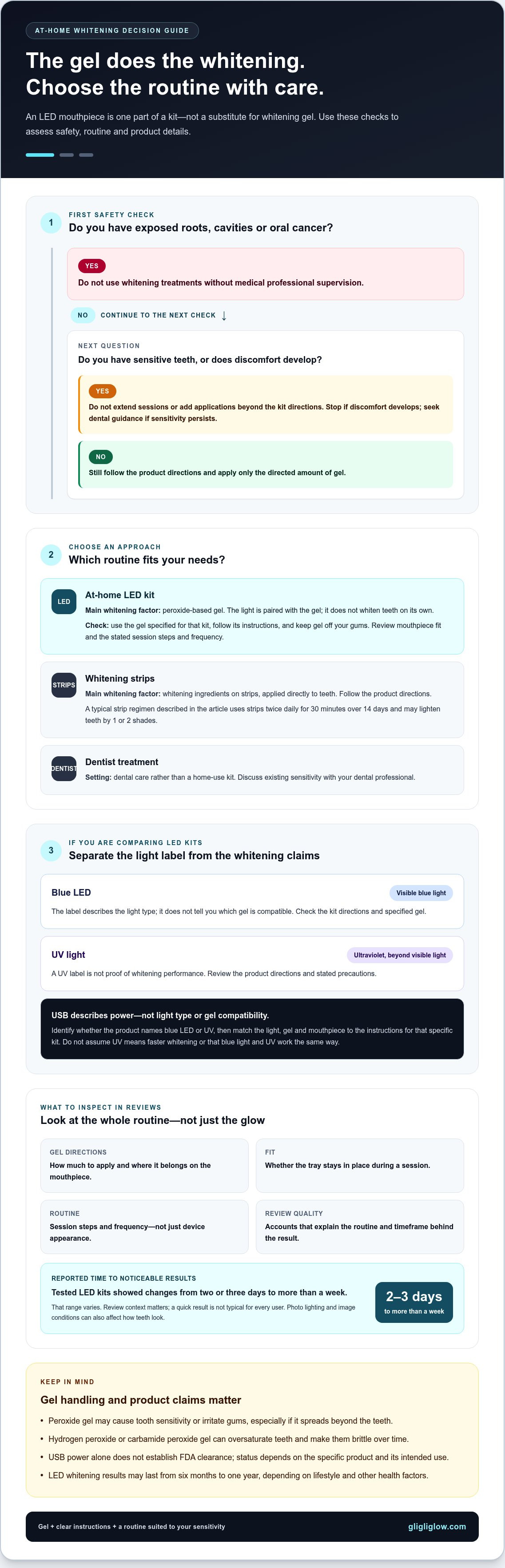
Sensitivity needs attention. Peroxide gel may cause tooth sensitivity or irritate gums, especially if it spreads beyond the teeth. Hydrogen peroxide or carbamide peroxide gel can oversaturate teeth and make them brittle over time. If you have exposed roots, cavities, or oral cancer, don't use whitening treatments without medical professional supervision. For sensitive teeth, avoid extending sessions or adding extra applications beyond the kit directions.
Use a kit according to its instructions, apply only the directed amount of gel and keep it off your gums. Stop if discomfort develops, and seek dental guidance if sensitivity persists. USB power alone doesn’t establish whether a whitening light is FDA-cleared; regulatory status depends on the specific product and its intended use.
Results from LED whitening may last from six months to one year, depending on lifestyle and other health factors. Choose the method whose routine and sensitivity considerations best match your needs.
At-home LED teeth whitening kit reviews
Reviews of at-home LED kits are most useful when they assess the full routine, not just the light. A USB powered teeth whitening light is one part of a kit; the gel, mouthpiece fit, directions and ease of use all shape the experience. Look for clear instructions and practical details, such as how the mouthpiece fits and how to apply the gel.
Reported time to noticeable results varies: tested LED whitening kits showed changes anywhere from two or three days to more than a week. That range makes review context important. A review should explain the routine followed and describe the visible change, rather than treating a quick result as typical for every user. Before-and-after photos can help illustrate a result, but lighting and image conditions can affect how teeth look.
What whitening gel is compatible with USB teeth whitening lights? Use the gel specified for the particular kit and follow its instructions. USB describes how the device receives power; it doesn’t tell you which gel is compatible. Whitening gels may contain different ingredients, so the kit directions explain how to use its formula with the light and mouthpiece.
- Gel directions: Check how much gel to apply and where it belongs on the mouthpiece.
- Fit: Look for details about whether the tray stays in place during a session.
- Routine: Compare the stated session steps and frequency, not just the device’s appearance.
- Review quality: Prefer accounts that describe the routine and timeframe behind the result.
Match the gel and device instructions rather than mixing products based on a review. This helps keep the routine clear and avoids adding unplanned gel applications. For a coordinated at-home routine, explore at-home whitening options and compare each product’s directions with the kit you’re considering.
Blue LED versus UV lights
Blue LED and UV describe different kinds of light. Blue light is visible, while ultraviolet light lies beyond the violet end of the visible spectrum. LED refers to a light-emitting diode, and USB describes how a device receives power. A USB connection doesn’t tell you whether the device emits blue light or UV.
For an at-home whitening kit, compare the light source described on the product with the instructions for its gel and mouthpiece. Don’t assume a UV label means faster whitening or that blue light and UV work the same way. Look for a clear explanation of how the light fits into the recommended routine.
| Comparison point | Blue LED | UV light |
|---|---|---|
| Light description | Visible blue light from an LED | Ultraviolet light, outside visible light |
| What the label tells you | Light type, not gel compatibility | Light type, not proof of whitening performance |
| What to review | Kit directions and specified gel | Product directions and stated precautions |
Before choosing, take these steps:
- Read the device description and identify whether it names blue LED or UV.
- Match the light to the gel and use instructions supplied for that specific kit.
- Look for clear directions on placement, session length, and precautions.
- Compare the complete routine, not a light-color claim in isolation.
A blue glow may look sleek, but appearance doesn’t explain a device’s role. USB power makes a light convenient to connect, but says nothing about its wavelength or intended use. If a listing uses “LED” and “UV” as if they mean the same thing, treat the terms separately and rely on the product’s description. Choose a kit with clear information about its light and instructions, then follow its stated routine instead of improvising with another gel or device.
What is the typical price of a USB teeth whitening light kit in the US?
There isn’t one typical price for every USB teeth whitening light kit in the US. The total depends on what the package includes, particularly the whitening gel, mouthpiece and light device. USB describes the power connection, not the type or amount of whitening supplies in the box.
Compare kits by separating the device from the consumables. A kit that includes gel isn’t directly comparable to a light sold without gel. When shopping for personal gadgets and everyday items on platforms like Elite Finds, you may encounter standalone devices, meaning refill costs and separate gel purchases will also affect the ongoing routine. Read the package contents and refill details before comparing listings.
| Price comparison point | What to look for |
|---|---|
| Included items | Whether gel, mouthpiece, and light are part of the package |
| Gel supply | How much gel is provided and whether refills are sold separately |
| Device details | What the listing says about the light and its use |
| Routine instructions | Whether directions explain gel application and device use |
Before comparing two listings, check whether each includes gel and whether their directions describe a similar at-home routine. A light-only listing and a complete kit serve different needs, so comparing displayed prices alone can mislead. “USB” doesn’t tell you what’s included.
- Write down the included device, gel, and mouthpiece for each option.
- Separate refill purchases from the initial kit contents.
- Compare instructions and product details alongside the package contents.
Choose based on the complete routine you want, not a low headline price. If you’re ready to compare options, explore at-home whitening kits and review what each package includes before deciding.
GLI GLI: GLI GLI Teeth Whitening Kit
GLI GLI Teeth Whitening Kit is a natural next step if you’re looking for an at-home whitening routine with a kit format. It gives you a product to consider after comparing how whitening gel and LED devices fit into home care. Choose it when you want a kit, or explore GLI GLI Teeth Whitening Gel Refills if you’re replenishing gel for your routine. The GLI GLI Teeth Whitening Pen offers another format, while the GLI GLI LED Whitening Device is a separate device option. Compare each offering with your preferred routine, and follow the directions supplied with the product you choose.
Visit gligliglow.com to explore the at-home whitening options.
Make your next smile-care step feel intentional
Choose a routine that fits your life, rather than picking a device for its glow alone. Before starting, decide what kind of at-home care you can maintain and read the directions for that specific product. A USB powered teeth whitening light may suit a routine built around a device and gel, while another format may feel simpler for your daily habits.
GLI GLI offers the GLI GLI Teeth Whitening Kit, GLI GLI Teeth Whitening Gel Refills, and GLI GLI Teeth Whitening Pen. Explore the options at your own pace and choose the format that feels right for your personal care routine. If you’d like to take the next step, contact GLI GLI for help.
A thoughtful routine starts with a choice that feels manageable. Keep it gentle, follow the product directions, and enjoy making your smile care your own.
Frequently Asked Questions
Are LED lights safe to use?
LED whitening devices should be used only as directed, with oral health in mind. People with exposed roots, cavities, or oral cancer should not use whitening treatments without medical professional supervision. Follow the kit’s instructions for applying gel and positioning its mouthpiece. If you have a concern about your teeth or gums, make that the first consideration before starting an at-home whitening routine.
How do USB-powered teeth whitening lights work?
A USB-powered device connects through USB and provides light through its whitening mouthpiece. In a kit, the mouthpiece is used alongside whitening gel, so the light is only one part of the routine. USB describes the power connection, not the gel formula or kit instructions. Use the light and gel together only as directed.
Do LED teeth whitening lights actually whiten teeth?
The LED light alone doesn’t whiten teeth; whitening gel provides the main effect. A light’s glow isn’t a useful measure of whitening performance. Compare the gel instructions and its role in the kit rather than choosing by appearance. The light is an addition to a gel-based routine, not a replacement for the whitening ingredient.
Which USB-powered teeth whitening lights are best reviewed in the US?
There isn’t one light type that reviews establish as best for every user. Tested at-home LED kits showed noticeable results anywhere from two or three days to more than a week. Read reviews for the specific kit’s routine, gel, and reported timeframe. Give more weight to accounts describing how the product was used than to a brief rating without context.
What are the risks and side effects of LED teeth whitening kits?
Whitening gel can cause tooth sensitivity, and peroxide gel may oversaturate teeth and make them brittle over time. People with exposed roots, cavities, or oral cancer should not use whitening treatments without medical professional supervision. Don’t add extra applications or extend the product’s directions to chase a quicker result. The light does not remove risks associated with the gel.


