


If you’re wondering how to remove stubborn tooth stains at home, start by considering whether the discolouration is on the tooth’s surface or comes from deeper inside it. Coffee and tea can leave surface stains, while injury, some medicines, or dental work may cause changes that whitening products can’t lift.
It makes sense to be cautious. Conflicting DIY tips can make it hard to know what’s gentle, and whitening may trigger sensitivity, especially if you use a product too often or have an untreated dental issue. Scrubbing harder isn’t always the answer, and acidic or abrasive home remedies can do more harm than good.
This guide explains how to spot likely causes, choose a careful at-home approach for suitable stains, and set realistic expectations. It also covers when persistent, unusual, or one-tooth discolouration needs a dentist’s assessment, so you can care for your smile with less guesswork.
Key Takeaways
- Identify whether discolouration is on the tooth surface or within it, since the cause affects which approaches may help.
- Understand why brushing can manage surface build-up but can’t change every type of tooth discolouration.
- Compare routine oral care, whitening toothpaste, at-home whitening products, and dental cleaning to see what each can realistically do.
- Learn how to remove stubborn tooth stains at home with a cautious plan, following product directions instead of adding treatments for faster results.
- Consider whether an at-home kit may suit your stains, and what comes in the Sparkle Booster Teeth Whitening Kit.
What kind of tooth stain are you trying to remove?
A visible stain doesn’t automatically mean you need a stronger whitening product. Discolouration can have different causes, and the safest next step depends partly on where it occurs. Some marks collect on a tooth’s outer surface; others reflect changes within the tooth. The pattern can offer clues, but it can’t confirm the cause by itself.
Two useful terms
- Extrinsic stains are surface discolouration on the outside of a tooth. Pigments from food, drinks, or tobacco may contribute.
- Intrinsic discolouration develops within the tooth. Ageing, some medicines, injury, or changes as a tooth develops may play a part.
How to tell surface stains from deeper discolouration
Surface staining may look like a general yellow or brown tint, or marks that are more noticeable near the gumline or in small grooves. It can affect several teeth, particularly when staining substances are part of your regular routine. These patterns are clues, not a diagnosis. A deeper change may look like an overall shift in tooth colour or affect just one tooth, and may not respond well to products aimed at surface stains.
For an overview of different causes and categories, see Tooth discoloration. If a change is unexplained, limited to one tooth, or persists despite gentle oral care, arrange a dental assessment before trying to whiten it. A dental professional can examine the tooth and help determine whether whitening is appropriate.
Everyday sources of stubborn-looking stains
Daily habits can gradually affect tooth colour. Coffee and tea contain pigments that may cling to the tooth surface, while richly coloured foods such as berries or sauces can also contribute. Tobacco is another possible source of surface staining. Frequent exposure may make discolouration more noticeable, but it doesn’t mean you’ve done anything wrong or that brushing harder is the solution.
Colour alone doesn’t reveal what caused a stain. Yellowing can be linked to surface pigments or natural changes with age, while brown or grey tones can have different explanations. As enamel changes with age, the underlying tooth colour may show through more. Some medicines can also affect tooth colour, depending on the medicine and when it was taken. Don’t stop or alter prescribed medication because of a stain; discuss concerns with your dentist or prescribing clinician.
To decide how to remove stubborn tooth stains at home, start with the likely type of discolouration, not a DIY remedy chosen by colour alone. If you’re unsure, or the change is new or limited to one tooth, get it assessed before using whitening products.
Why some tooth stains do not lift with brushing
Brushing is essential for a clean, healthy-feeling mouth, but it has limits. It helps clear plaque, food particles, and some surface build-up. It can’t change a tooth’s natural shade or remove every pigment that has settled on its surface. Brushing harder isn’t a shortcut: it may irritate your gums without addressing the cause of the colour change.
It helps to distinguish stain removal from whitening. Cleaning removes deposits from the teeth, while whitening changes the appearance of natural tooth colour. Good oral care or a suitable whitening approach may help with surface staining. A deeper change, age-related discolouration, or a change affecting just one tooth may be less responsive to products designed for surface stains.
Surface deposits, enamel, and dentin: what is different?
Enamel is the hard outer layer of a tooth. Dentin sits beneath it and naturally contributes to tooth colour. Pigments on the surface and colour changes within the tooth are different issues, so the same approach won’t necessarily help both. Whitening gels are designed to alter the colour of natural teeth, not remove tartar or diagnose why a tooth has changed. The ADA Guide to Teeth Whitening explains how whitening works and outlines product and safety considerations.
When stubborn staining may need a dental assessment
Pay attention to changes in pattern, not just shade. If a stain remains despite consistent, gentle brushing, it may be more than removable surface build-up. Arrange a dental assessment if the discolouration is persistent, new, unexplained, or limited to one tooth. Don’t try to diagnose the cause by colour alone. A dental professional can examine the tooth and assess whether deposits, changes within the tooth, or another cause may be involved.
This is especially useful before starting a whitening routine if you’re unsure what you’re treating. Whitening a tooth without understanding a sudden or localised colour change may delay the right next step. An assessment can help determine whether cleaning, whitening, or a different response is appropriate.
How to remove stubborn tooth stains at home depends on what’s behind them. If the concern appears to be surface staining and you’re ready to explore a suitable option, take a look at at-home teeth-whitening options. Keep expectations realistic: a product may help with some stains, but it won’t address every cause of discolouration.
At-home stain removal methods: what can help, and what has limits?
There’s no single fix for every mark. The right starting point depends on whether you’re managing everyday surface build-up, looking to brighten natural tooth colour, or dealing with deposits that routine brushing can’t remove. Use this comparison to set expectations before choosing an approach.
| Approach | What it may help with | Its limits |
|---|---|---|
| Consistent oral hygiene | Removing plaque, food debris, and some fresh surface build-up. | Won’t reliably change established discolouration or a tooth’s natural shade. |
| Whitening toothpaste | Helping reduce some surface stains when used as directed. | Results vary, and it may not address deeper colour changes. |
| Whitening products | Changing the appearance of natural teeth for suitable stains. | They don’t remove tartar or treat every cause of discolouration. |
| Dental cleaning | Removing deposits that home brushing may not clear. | Cleaning isn’t the same as whitening, and it may not alter the tooth’s underlying colour. |
Which gentle home-care habits are worth keeping?
Keep brushing gently and cleaning between your teeth as part of your regular routine. These habits support oral health and help manage plaque and new surface build-up, but they may not lift an established stain. Notice whether marks seem more visible after repeated exposure to dark-coloured foods or drinks. That pattern can help you identify possible contributors, though it can’t confirm the cause.
There’s no need to scrub harder or expect a quick rinse to erase a persistent mark. If you’re considering how to remove stubborn tooth stains at home, treat daily care as the foundation, not a guaranteed whitening treatment.
Why DIY stain-removal hacks can disappoint
A household ingredient isn’t automatically safe or effective for teeth. Acidic mixtures may be unsuitable for enamel, while abrasive powders or forceful brushing can be harsh on teeth and gums. Homemade peroxide treatments also make it difficult to control how a product is used. Skip improvised recipes and repeated applications; choose products intended for teeth and follow their directions.
Personal anecdotes can sound convincing, but a method that seemed to help one person may not suit your teeth or the cause of your stain. Don’t use whitening products as a substitute for assessment if the discolouration is unexplained, new, or limited to one tooth. A dental professional can help distinguish removable deposits from other changes and guide your next step.
For a comfortable, realistic routine, keep up gentle oral care, avoid trying to force a stain away, and choose whitening only when it’s appropriate for the type of discolouration. If an approach causes discomfort or sensitivity, stop using it and seek dental advice.
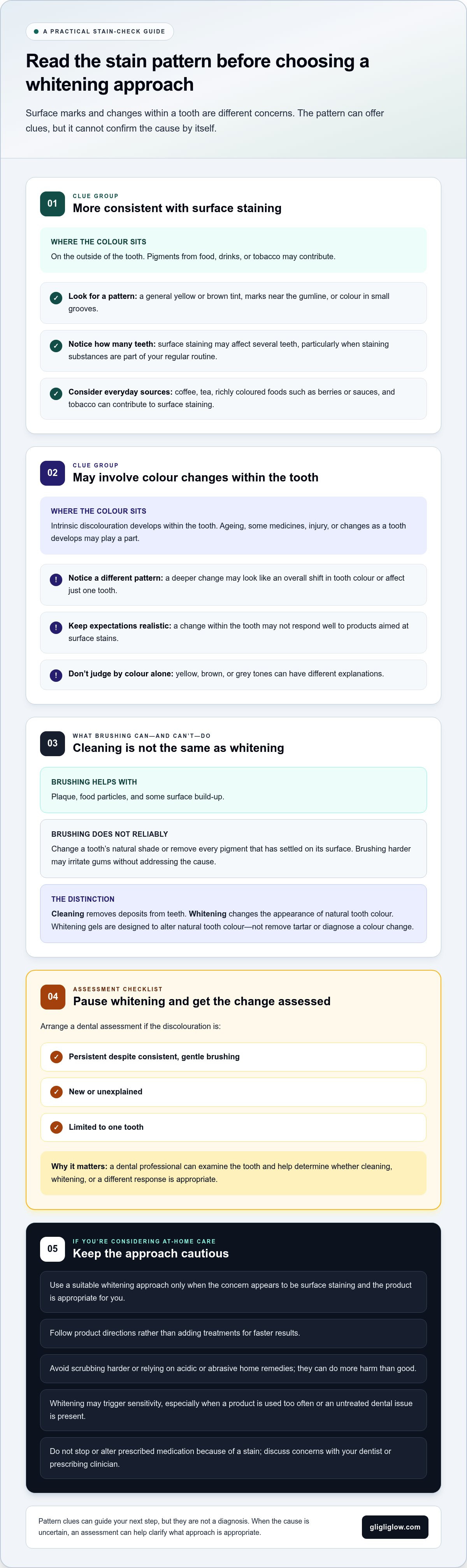
A Careful At-Home Plan for Stubborn Tooth Stains
A calm, consistent approach is safer than piling on whitening products or scrubbing harder. The cause of the discolouration matters: home whitening may help with some stains, but it won’t address every type. Use this sequence to make a thoughtful choice and know when to pause.
A simple sequence to try at home
- Observe the pattern. Notice whether the colour change seems widespread or concentrated on one tooth, and whether it’s new or longstanding. These observations can help you describe the change, but they can’t diagnose its cause.
- Keep daily care gentle. Brush regularly and clean between your teeth. Avoid forceful scrubbing, abrasive DIY mixtures, or combining whitening products. More intensity doesn’t necessarily mean better results.
- Choose a suitable whitening approach. If you decide to use a whitening product, follow its directions closely, including how much to use and how often. Don’t add extra applications to chase faster results or combine products unless their instructions say to do so.
- Review progress and comfort. Look for gradual changes over the period stated in the product directions, rather than judging your teeth after every use. Pay attention to sensitivity or gum irritation, too. If you’re concerned about sensitivity, read this guide to sensitive whitening strips before deciding what may suit you.
Keep expectations realistic. The stain’s cause, depth, and type all affect whether whitening at home may make a difference. A product won’t change every discolouration, and a tooth’s natural colour may not respond like a surface stain. If you’re unsure what you’re treating, get dental advice before starting. That’s a more reassuring first step than trying several methods and hoping one works.
When to pause home whitening and get advice
Stop using a whitening product if you experience concerning discomfort or irritation, and follow the product’s safety guidance. Don’t apply more to compensate or immediately switch to another whitening method. If symptoms persist or worry you, seek dental advice.
It’s also wise to pause before whitening a sudden, unexplained, persistent, or one-tooth colour change that hasn’t been assessed. A dental professional can examine it and advise whether whitening is appropriate. Home whitening is for suitable cosmetic stains, not a way to cover up a change whose cause is unknown.
Ready to explore an at-home option once you’ve considered whether whitening fits your situation? Explore at-home teeth whitening, and use any product only as directed.
Could an at-home whitening kit help with your stubborn stains?
It may, if the discolouration is the kind that responds to at-home whitening. The Sparkle Booster Teeth Whitening Kit is an option for suitable stains, not a universal fix for every change in tooth colour. If the cause is unclear, or one tooth has changed suddenly, get dental advice before starting a whitening routine.
What the Sparkle Booster kit offers
The kit includes an LED Whitening Device, two 5 ml PAP gel syringes, and a 2 ml Remineralization Pen. It also comes with a protective case, Type-C charger, shade guide, user manual, and thank-you card, bringing the kit components and instructions together.
Each gel syringe provides 10-15 uses, for 20-30 sessions in total when used as directed. The Remineralization Pen is included in the kit, but that doesn’t guarantee sensitivity will be prevented or eliminated. If you’re comparing formats and features, the at-home teeth whitening kit guide can help you consider what to look for.
Set realistic expectations before choosing home whitening
GLI GLI states that results may be visible in 5-10 days and that the kit can deliver up to 8 shades whiter. These are brand claims, not guaranteed results for every person or every type of stain. Your outcome depends in part on the cause and kind of discolouration, so a deeper or tooth-specific change may not respond like suitable surface staining.
Use the kit only as directed, and limit use to once daily. Don’t add extra applications to try to speed things up. Follow the product instructions for the amount of gel and use, and stop if you experience concerning discomfort or irritation. If you’re unsure whether whitening is suitable for your teeth, a dental professional can help you decide before you begin.
A careful routine is the best route to a brighter-looking smile: choose an approach that fits the stain, follow its instructions, and give results time. Knowing how to remove stubborn tooth stains at home also means recognising when whitening isn’t the right next step. Persistent or unexplained discolouration deserves assessment rather than another round of product.
If an at-home kit feels like a suitable option for your situation, explore GLI GLI teeth whitening and review the product directions before use.
Choose Your Next Step with Confidence
Your next move doesn’t have to be a dramatic fix. Take a moment to decide what matters most: a gentle daily routine, a carefully chosen whitening option, or clarity from a dental assessment before trying anything new. A brighter-looking smile is a personal goal, and feeling comfortable with your approach matters as much as the result.
If you’re still wondering how to remove stubborn tooth stains at home, keep your plan simple. Avoid chasing quick changes with extra applications or harsh DIY methods. If the discolouration is unusual, persistent, or worrying you, let a dental professional assess it before you begin whitening. That pause can help you choose your next step with more confidence.
For suitable stains, explore a considered at-home option and follow its directions carefully. Explore GLI GLI teeth whitening to find an approach for your routine. Keep it gentle, stay patient, and enjoy caring for your smile in a way that feels right for you.
Frequently Asked Questions
Can stubborn tooth stains be removed at home?
Some stubborn stains can improve with at-home care, but results depend on what’s causing the colour change. A whitening product may help suitable stains on natural teeth, while deposits or changes within a tooth may need a different approach. If you’re deciding how to remove stubborn tooth stains at home, avoid stacking remedies. Choose one product intended for teeth, follow its directions, and seek dental advice if the mark is new or unusual.
Does baking soda remove stubborn tooth stains?
Baking soda may help polish away some surface marks, but it doesn’t bleach the tooth or reliably treat deeper discolouration. Using a household powder with force, or too often, may be harsh on teeth and gums. If you’re interested in a baking-soda toothpaste, use a product made for brushing and follow its label rather than mixing a DIY scrub. Stop if your gums or teeth feel irritated.
Can whitening products remove tartar from teeth?
No. Whitening products change the appearance of natural tooth colour; they aren’t designed to remove tartar, which is hardened build-up on teeth. Brushing may not clear deposits that have hardened, so don’t try to scrape them away with tools at home. A dental professional can assess the build-up and advise on appropriate cleaning. Whitening before deposits are addressed may not give you the even-looking result you expect.
Is it safe to whiten teeth if they are sensitive?
It depends on how sensitive your teeth are and what’s causing it. If sensitivity is severe, ongoing, or occurs with everyday eating and drinking, speak with a dentist before whitening. If you use a product, follow its directions and stop if discomfort worsens or irritation develops. Don’t increase the amount or frequency to push through sensitivity. A dental professional can help you decide whether whitening is suitable for you.
What should I do if one tooth suddenly looks darker?
Arrange a dental assessment rather than trying to cover the change with whitening. Note when you first noticed it and whether the colour is continuing to change; these details may help explain what’s happening. Colour alone can’t reveal the cause, so avoid diagnosing it yourself or applying whitening gel to that tooth. If the change comes with pain or other concerning symptoms, seek dental advice promptly.
Can whitening products change the colour of crowns, veneers, or fillings?
No, whitening products don’t lighten crowns, veneers, or fillings in the same way they can change the shade of natural teeth. If natural teeth become lighter while dental restorations stay their original colour, the difference may become more noticeable, especially for a front tooth. Before whitening, consider whether you have visible restorations and discuss your goal with a dentist, who can explain how whitening may affect the overall match.


