


A whitening pen is a handy touch-up tool, not an instant makeover. A teeth whitening pen for quick touch-ups applies a whitening gel or serum to tooth surfaces, and its main active ingredient is usually hydrogen peroxide or carbamide peroxide. The formula needs time to work, so follow the product’s directions before eating or drinking.
That compact format can make touch-ups feel simple: some pens dispense gel when you squeeze the tube, making them easy to carry for on-the-go use. But the formula matters, too. Ingredients and application can affect how quickly the solution works and whether your teeth feel sensitive.
Want to know what to expect before adding a whitening pen to your routine? This guide explains how pens work, how to follow treatment directions, and what to consider around food, drinks, and sensitivity. You’ll also learn why careful application matters and when a portable pen may suit your touch-up routine.
Key Takeaways
- Whitening pens apply a gel to tooth surfaces, often using hydrogen peroxide or carbamide peroxide as the active ingredient.
- Follow the pen’s directions for application and wait time before eating or drinking.
- Formula and application technique can affect sensitivity, so keep gel away from the gum line and avoid overuse.
- A compact, squeeze-to-apply design can make a whitening pen convenient for touch-ups on the go.
1. How do teeth-whitening pens work?
A whitening pen applies a small amount of gel directly to tooth surfaces. Its active ingredient is usually hydrogen peroxide or carbamide peroxide. These compounds help break down some stains on natural teeth, which can make them look brighter. Since the gel needs contact with the teeth, brushing and flossing first helps clear away residue.
Hydrogen peroxide and carbamide peroxide are different compounds, but comparisons indicate no significant difference in whitening effectiveness. The formula, concentration, application, and treatment time all shape the experience. Some pens have a built-in applicator; others use a separate brush to spread serum across individual teeth, including back teeth. Apply a thin, even layer to visible tooth surfaces and keep it off the gum line.
What are the best pens for quick touch-ups in the U.S.? Look for clear ingredient information, directions you can follow, and an applicator suited to the areas you want to reach. Dentist Shahrooz Yazdani recommends trusted whitening pen brands with 10% or less peroxide. Don’t assume a higher concentration means a better choice for your routine.
Compared with strips, a pen lets you target individual teeth, while strips cover a broader area. Professional whitening takes place in a dental setting; pens and strips are at-home options. Choose the format that best suits your preference for precise application or broader coverage.
How much does a whitening pen cost in the United States? The price depends on the formula, applicator, and what comes with the product. Check the listed price for the specific pen you’re considering rather than assuming every format costs the same.
Do pens whiten crowns, veneers, fillings, or bonding? Whitening gel works on natural tooth surfaces, not dental restorations. A natural tooth may change shade while a crown or filling stays the same, so consider existing dental work before using peroxide gel.
2. Drying time and eating or drinking after application
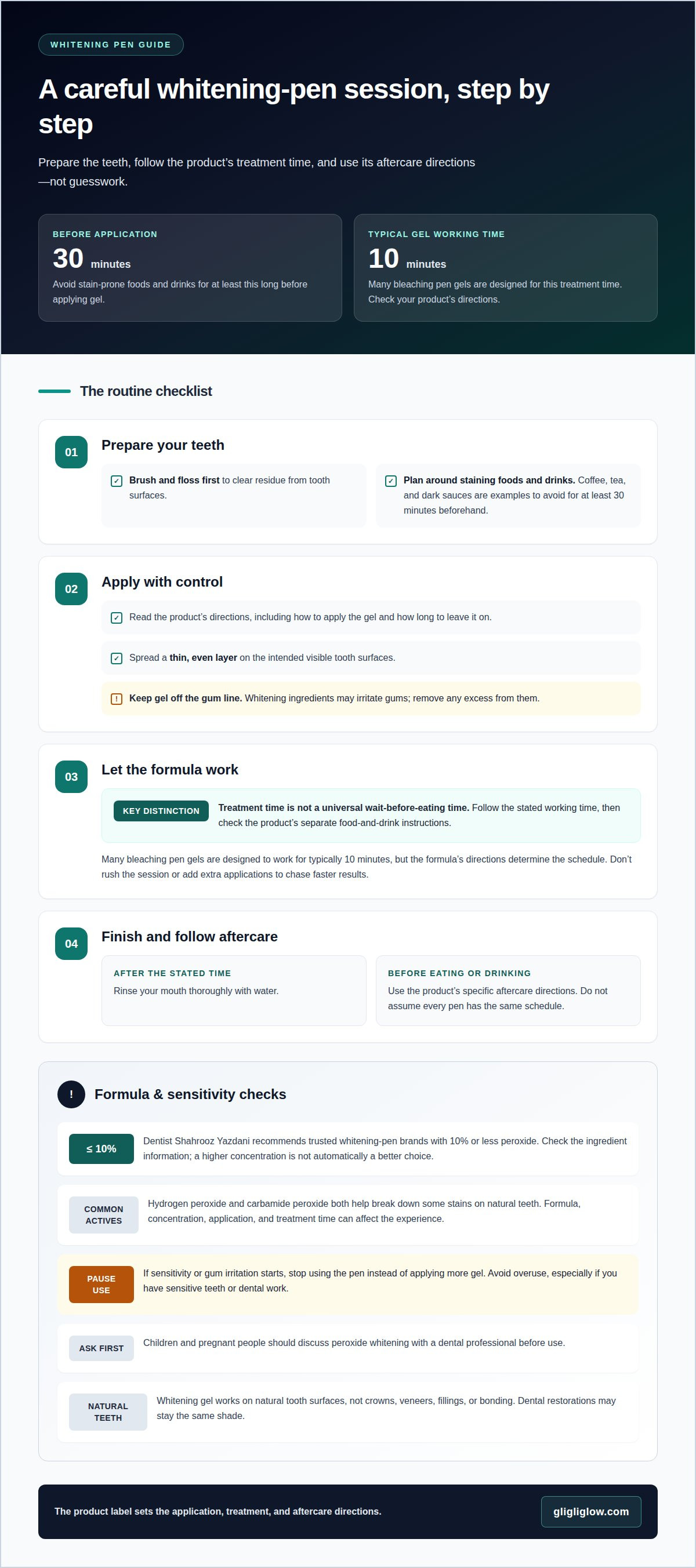
Timing matters before and after a whitening pen session. Avoid foods and drinks that can stain teeth for at least 30 minutes before applying gel. Coffee, tea, and dark sauces are examples to set aside during that pre-application window. This helps keep fresh staining away while you prepare to use the formula.
After application, follow the product’s directions for its treatment time. Most bleaching pen gels are designed to work for typically 10 minutes. That is working time, not a universal wait before eating or drinking. The post-treatment instructions depend on the formula, so use its stated guidance rather than assuming every pen has the same schedule.
- Read the pen’s instructions before starting, including its application and treatment time.
- Apply the gel as directed, keeping it on the intended tooth surfaces.
- Let the formula work for the stated time, then rinse your mouth thoroughly with water.
Rinsing is a useful finishing step after treatment. For example, once a 10-minute gel session ends, rinse thoroughly before returning to your usual routine. Then follow the product’s food-and-drink directions. Avoid treating the gel’s drying time as permission to eat immediately, because the treatment period and the aftercare instructions serve different purposes.
Portable pens can make touch-ups easier to fit around a busy day. Some are designed for on-the-go application, with gel dispensed by squeezing the tube. Keep the cap on between uses, and choose a moment when you can complete the full application and treatment steps without rushing. A quick swipe between errands isn’t a substitute for following the directions.
For a gentle, consistent routine, use the pen according to its label instead of adding extra applications to chase faster whitening results. Staining foods and drinks can affect the appearance of teeth, so plan the treatment around meals when practical. A little preparation, the stated treatment time, and a thorough rinse make each session easier to manage.
3. Whitening pen formulas and sensitivity
A whitening serum’s formula can affect both sensitivity and results. Hydrogen peroxide and carbamide peroxide are common active ingredients, but the rest of the formula also matters. A pen that feels comfortable for one person may cause sensitivity for another. Read the ingredient list and directions before use.
Concentration deserves attention, too. Dentist Shahrooz Yazdani recommends choosing trusted teeth-whitening pen brands with 10% or less peroxide. That gives you a concrete figure to consider when reviewing a label. Don’t assume that a stronger formula will deliver a better or more comfortable result, especially if your teeth already react to cold drinks or brushing.
Apply gel carefully to protect your gums. Place it on visible tooth surfaces and avoid the gum line, where whitening ingredients may cause irritation. Use a light, controlled application rather than coating surrounding tissue. If the applicator is difficult to control, adjust your angle before applying gel.
Sensitivity and existing dental work call for extra care. Avoid overusing whitening products, particularly if you have sensitive teeth or dental work. Follow the product instructions rather than adding applications. If sensitivity or gum irritation starts, pause use instead of applying more gel.
Children and pregnant people should not start peroxide whitening without discussing it with a dental professional. Age, pregnancy, oral health, and ingredients all matter when considering a whitening product. If you’re choosing a formula for sensitive teeth or gums, review its peroxide content and directions first. Keep gel on tooth surfaces and remove any excess from the gums.
4. Portable, on-the-go whitening
A squeeze-to-dispense pen can make targeted whitening easier to fit into a busy day. Some whitening pens are designed for portable, on-the-go application, so you can apply gel directly to selected teeth. That convenience doesn’t change the treatment instructions: the gel still needs its stated working time, and the formula still contains ingredients such as hydrogen peroxide or carbamide peroxide.
Plan the session around your schedule, not just the size of the pen. Most bleaching pen gels are designed to work for typically 10 minutes. Choose a moment when you can apply the gel carefully and leave it in place for the full directed time. A rushed swipe before a meeting may lead to uneven coverage if you miss teeth or touch your gums.
Before applying, avoid foods or drinks that might stain teeth for at least 30 minutes. Coffee before a commute or tea during a work break can make timing worth planning. Follow the pen’s instructions, then rinse your mouth thoroughly with water after treatment. The rinse is part of the routine, even when you’re away from home.
A portable pen suits targeted touch-ups, but it may not replace a broader whitening routine. For example, a pen can apply gel to a particular visible tooth, while other treatments cover more teeth. Keep application controlled and follow the directions rather than adding gel or repeating treatments to speed up results. Use peroxide formulas carefully around enamel and gums.
Make portability work for you: choose a calm moment, apply the gel to the intended surfaces, allow the stated treatment time, and rinse afterward. If you can’t complete those steps while out, wait until a more convenient point in your day. A pen’s compact format offers flexibility, but the routine still depends on careful application and the product’s directions. Explore portable whitening options for a touch-up routine that fits your day.
GLI GLI: GLI GLI Teeth Whitening Kit
The GLI GLI Teeth Whitening Kit is an option for an at-home whitening routine beyond occasional touch-ups. For targeted application, the GLI GLI Teeth Whitening Pen is a portable choice. GLI GLI Teeth Whitening Gel Refills and the GLI GLI LED Whitening Device are also available separately.
Choose based on the routine you want: a kit for at-home whitening or a pen for focused touch-ups. Follow the product’s directions, especially if you have sensitivity or dental work. Whitening products act on natural teeth, so restorations such as crowns and veneers may not change shade.
Explore GLI GLI’s at-home whitening options to find a product that suits your routine.
Make your whitening routine fit your day
Think of a whitening pen as one possible part of a routine that suits your habits, not a shortcut to a perfect smile. A teeth whitening pen for quick touch-ups may appeal if you prefer targeted application. Take time to read the directions and choose an approach you can use thoughtfully alongside your usual oral care.
Your next step can be simple: decide whether you want a focused pen or a broader at-home option, then explore what fits your preferences. If you’d like help with that choice, contact GLI GLI. A little care in choosing your routine can help you feel more comfortable and confident with your smile.
Frequently Asked Questions
How do teeth-whitening pens work?
A teeth whitening pen for quick touch-ups applies gel to selected tooth surfaces for targeted use. Its peroxide-based formula acts on stains in natural teeth; results depend on the formula and following its directions. For instance, a pen can target one visibly stained tooth without coating every tooth. It won’t change the shade of crowns, veneers, fillings, or bonding.
What Are Bleaching Pens?
Bleaching pens are small applicators that hold tooth-whitening gel or serum. A teeth whitening pen for quick touch-ups may use a twist or squeeze mechanism to dispense gel, then its tip or a separate brush applies it. The compact format suits focused use, such as touching up a visible tooth before an event. It’s still a peroxide treatment, so use it only as directed.
How do teeth whitening pens work and what ingredients do they use?
Most whitening pens use hydrogen peroxide or carbamide peroxide as the active ingredient. These compounds help break down stains on natural tooth surfaces. Their whitening effectiveness does not differ significantly, so the ingredient name alone doesn’t determine which pen is right for you. Check the label for the active ingredient and concentration, then follow the application directions.
How quickly do teeth whitening pens show results, and how long do results last?
There isn’t one timeline for every pen, because results depend on the formula, application, and type of staining. GLI GLI’s at-home kit information describes noticeable whitening in 5-10 days. Whitening results can fade as teeth pick up new stains, so periodic touch-ups may be needed. Maintaining regular oral care can help limit surface staining between treatments.
How to apply a teeth whitening pen correctly for best results?
Start with clean teeth, then use a mirror to guide the applicator across the intended surfaces. Apply a controlled layer and avoid the gum line. Follow the product label for the amount, frequency, and treatment time, since pens differ. If the tip carries excess gel, pause before applying to avoid spreading it onto your gums.
Are teeth whitening pens safe, and what side effects can they cause?
Whitening pens can cause tooth sensitivity or gum irritation, particularly if gel touches the gums or the product is overused. Stop using it if irritation develops, and follow the product directions. GLI GLI products are recommended for adults. They are not suitable during pregnancy or breastfeeding, with braces or gum disease, or with worn enamel, cavities, or allergies to ingredients.


