


Fear of smiling can affect more than your photos; it can make everyday moments feel tense, too. Learning how to get over fear of smiling starts with noticing what triggers your anxiety, then practicing a calmer response in low-pressure situations. A steady oral-care routine may also help you feel more at ease about your teeth.
If smiling feels awkward or you worry that people are judging your expression, you’re not alone. Smile anxiety can be connected to self-consciousness about your teeth or social anxiety, and it may make conversations and other social moments harder. This guide looks at where that fear can begin, how it may affect your confidence and well-being, and practical ways to build a more relaxed response. You’ll also find ways to practice smiling gradually and make oral care a supportive part of feeling good about your smile.
Key Takeaways
- Notice the situations that trigger smile anxiety, and ask someone you trust to help you spot patterns without judgment.
- Rehearse a relaxed expression in imagined and low-pressure situations, then give yourself room to adjust as you practice.
- Build confidence with a steady oral-care routine, including brushing, flossing, and dental checkups.
- Explore how smile anxiety may shape social moments and well-being, and recognize when extra support could help.
Practicing a replacement behavior in imagined scenarios
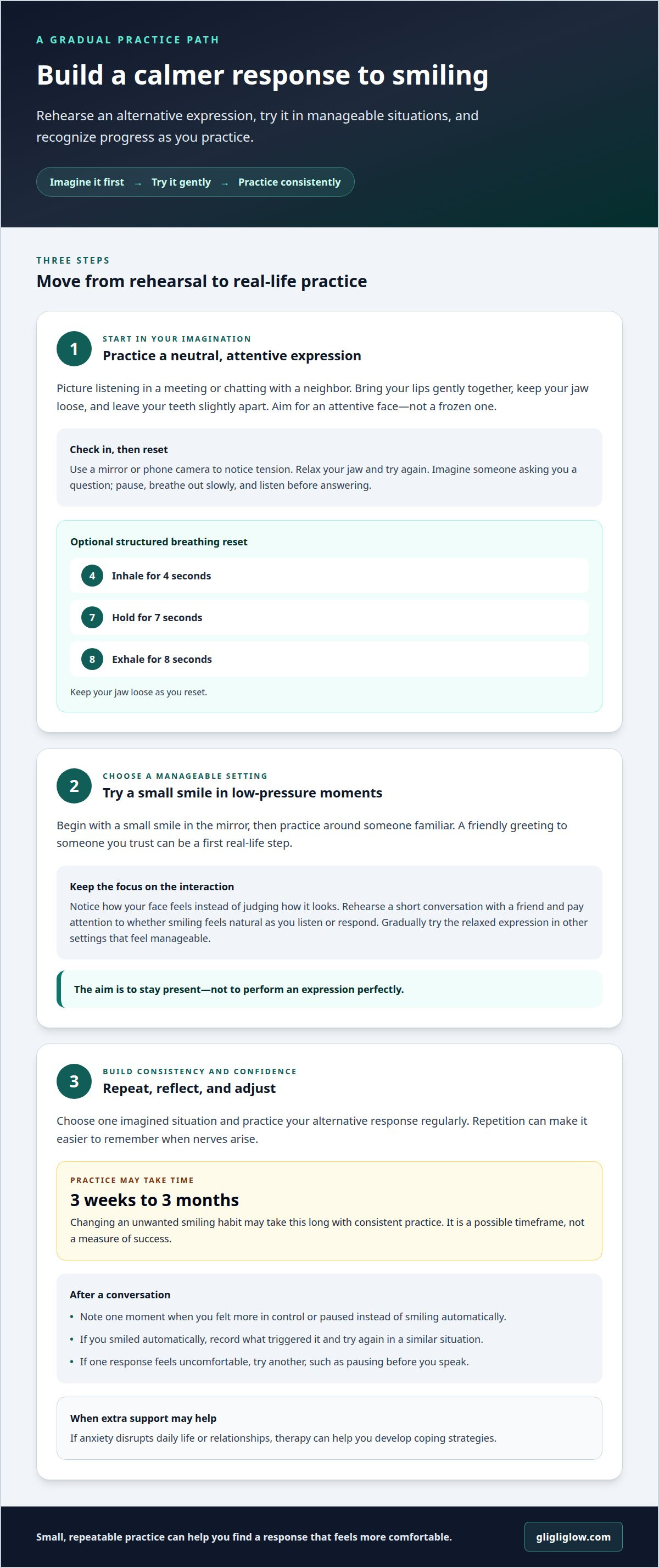
Learning how to get over fear of smiling can start with rehearsing a calm response before social moments. Picture a specific conversation, practice your expression, then try that response in an easy, real-life setting. Repetition can make it easier to remember when nerves arise.
-
Practice a neutral, attentive expression
Picture listening during a meeting or chatting with a neighbor. Gently bring your lips together, keep your jaw loose, and leave your teeth slightly apart. Check your expression in a mirror or phone camera. Aim for an attentive face, not a frozen one. If you notice tension, relax your jaw and try again.
Next, imagine someone asking you a question. Pause, breathe out slowly, and listen with a neutral expression before answering. This gives you an alternative to smiling automatically.
-
Try smiling in low-pressure settings
Start with a small smile in the mirror, then practice around someone familiar. Focus on how your face feels instead of judging its appearance. A friendly greeting to someone you trust can be a useful first step in real life. Gradually try the same relaxed expression in other situations, choosing settings that feel manageable.
You might rehearse a short conversation with a friend. Notice whether smiling feels natural while you listen or respond. The goal is to stay present with the other person, not to perform an expression perfectly.
-
Practice consistently to rebuild confidence
Choose one imagined situation and practice your alternative response regularly. Changing an unwanted smiling habit may take three weeks to three months of consistent practice. A slip doesn’t erase your effort. If one response feels uncomfortable, try another, such as pausing before you speak.
One practical way to get over fear of smiling is to recognize small signs of progress. After a conversation, note when you felt more in control. If anxiety disrupts daily life or relationships, therapy can help you develop coping strategies.
What is Smile Anxiety & Where Does it Start?
Smile anxiety means feeling uneasy or self-conscious about smiling. It can arise in specific situations, such as speaking in a group, hearing criticism, or feeling unsure about your teeth or expression. Notice when the feeling begins; that clue can help you understand what’s driving it.
- Track the situations that trigger a nervous smile. After an uncomfortable interaction, note where you were, who was present, and what you were thinking. For example, you might smile while receiving criticism, even when you feel hurt. Ask a trusted friend to gently point out when it happens. Compare their observations with your notes to spot patterns, not to judge your expression.
- Pause and reset when you notice the smile coming. Take a breath, let your exhale last longer than your inhale, and allow a quiet moment before answering. You can glance at your notes or take a sip of water to give yourself time. For a structured breathing exercise, inhale for 4 seconds, hold for 7, then exhale for 8. Keep your jaw loose as you reset.
- Acknowledge progress with kindness and specificity. After a conversation, recall one moment when you paused instead of smiling automatically. Note it in a journal or choose a small treat you enjoy. If you smiled automatically, record what triggered it and try again in a similar situation. This makes each interaction useful practice rather than a reason for self-criticism.
- Consider what may be beneath the anxiety. Low self-esteem or social anxiety can make attention feel intense, especially in relationships or group conversations. If anxiety disrupts sleep, work, or relationships, a licensed mental health professional can help you develop coping strategies. If smiling or laughter starts suddenly, feels uncontrollable, or doesn’t match your feelings, consult a doctor.
Dental hygiene and confidence
If worries about your teeth make smiling feel awkward, give oral care a steady place in your routine. Brushing, flossing, and dental checkups can support oral health and help you feel more prepared to show your smile.
- Make brushing and flossing a consistent ritual. Choose a time that fits your day, such as before getting ready in the morning. Clean your teeth carefully, then floss as part of the same routine. Treat these steps as practical self-care, not a test of whether your smile looks perfect. A familiar routine can make caring for your teeth feel less overwhelming.
- Use a mirror for gentle practice, not inspection. After brushing, look at your expression and notice how your smile feels. If you become anxious or start searching for flaws, look away and return your attention to the next step in your routine. A mirror can help you become familiar with your smile, but repeated checking may increase discomfort. Keep the exercise brief and kind.
- Plan a dental checkup if concerns are affecting your confidence. A checkup can help address questions about your teeth and oral hygiene. Write down your concern beforehand, such as feeling uncomfortable about a visible tooth, so you can explain it clearly. Regular checkups are one part of dental care, alongside brushing and flossing. You don’t have to hide your smile while you address your concerns.
- Pair oral care with a calming reset. If you feel tense before a social moment, finish your routine, relax your jaw, and take a slow breath. Then practice a small, natural smile in the mirror or around someone familiar. This links a feeling of being cared for with real interaction, instead of making appearance the only focus. Confidence can include comfort, expression, and being present with another person.
Social and physical impacts of fear of smiling
Fear of smiling can affect more than your facial expression. It may influence how you connect with people, respond to stress, and take part in everyday moments. Notice what changes when you hold back, then choose one small step toward connection.
- Notice what you avoid when you stop smiling. For example, you might hide your face in photos, stay quiet with a friend, or decline a group invitation. These choices can make social moments feel harder over time. Smiling can help you seem approachable, so consider whether fear is keeping you from showing warmth in ways that feel genuine. You don’t need to smile constantly to be friendly.
- Track how tension shows up in your body. During a conversation, notice whether you hold your breath, tighten your jaw, or look away. These signs can help you interrupt the pattern before it takes over. Pause, exhale slowly, and bring your attention back to the person speaking. Smiling may support mood and ease stress, but forcing an expression isn’t the goal. Aim for a response that matches how you feel.
- Build connection in manageable situations. Choose a short conversation with a trusted friend, then notice how it feels to listen without monitoring every expression. Try a small smile when it comes naturally, or use words and attentive listening to show interest. If you feel anxious, tell someone you trust that smiling feels difficult today. This can ease the pressure and help you stay involved.
- Respond when fear affects daily life. If anxiety disrupts sleep, work, or relationships, seek support from a licensed mental health professional. Therapy can help you develop coping strategies and confidence. If smiling or laughter begins suddenly, feels uncontrollable, or doesn’t match your feelings, consult a doctor. For a separate confidence goal, explore at-home smile-care options as part of your personal routine.
GLI GLI
GLI GLI offers at-home teeth-whitening products for people whose smile concerns include tooth shade. If that contributes to your self-consciousness, explore the GLI GLI Teeth Whitening Kit, Teeth Whitening Gel Refills, Teeth Whitening Pen, and LED Whitening Device as options for your oral-care routine.
Whitening can address tooth appearance, but it doesn’t treat anxiety or replace mental health support. Keep practicing the strategies in this guide, and consider whether an at-home whitening product fits your personal goals. Choose a next step that feels right for you, without expecting one change to resolve every concern.
Contact GLI GLI if you’d like to learn more about its teeth-whitening products.
Take Your Next Step Toward a More Comfortable Smile
Confidence grows through choices that feel manageable, not pressure to change everything at once. Keep practicing a response that feels natural, and let your smile reflect how you feel. If tooth shade is part of your self-consciousness, at-home whitening products may fit into your oral-care routine. They address appearance, not anxiety, so choose this step only if it supports your goals.
Learning how to get over fear of smiling is a personal process. You can move at your own pace, notice what helps, and seek support when anxiety affects everyday life. For information about GLI GLI’s teeth-whitening products, contact GLI GLI to discuss your needs.
Every small step toward feeling more at ease counts. Keep going, and give yourself room to grow.
Frequently Asked Questions
Why do I smile when I’m nervous?
A nervous smile can be an automatic response to tension, rather than a sign that you feel happy. Your expression may appear while you’re managing an awkward pause, answering an unexpected question, or trying to soften a stressful interaction. Notice whether it happens in particular settings, such as presentations or introductions. Recognizing the context can help you understand the response without treating it as a deliberate choice.
Why do I smile when I’m uncomfortable?
Smiling when you feel uncomfortable may be a learned social response, especially if you’ve used it to smooth over tense moments. For example, you might smile after receiving criticism, even when you feel hurt or disagree. The expression doesn’t necessarily reflect your real feelings. Pay attention to what happened just before the smile and whether you wanted to seem friendly, avoid conflict, or simply fill a silence.
What causes fear or anxiety about smiling?
Fear of smiling can relate to self-consciousness about your teeth, worries about being judged, low self-esteem, or social anxiety. A past experience, such as being teased about your appearance, may also shape how you feel in later social situations. These factors affect people differently. Consider whether your concern focuses on how your smile looks, how others react, or the attention you feel when smiling.
How can cognitive behavioral therapy help with fear of smiling?
Cognitive behavioral therapy can help you examine thoughts and behaviors connected with smile anxiety, then develop practical ways to respond. For example, a therapist may help you explore the thought, “Everyone is watching my teeth,” and consider other explanations for people’s reactions. You can also practice gradually in situations that feel manageable. Therapy supports coping skills and confidence, but it isn’t a teeth treatment.
Could fear of smiling be caused by social anxiety or past experiences?
Yes, fear of smiling can be connected with social anxiety or difficult past experiences, though neither explains everyone’s feelings. Someone who was mocked about their teeth, for instance, may become more alert to reactions during photos or group conversations. Social anxiety can make ordinary interactions feel heavily scrutinized. Thinking about when the discomfort began and where it appears can help clarify what support may be useful.
When should I seek professional help for fear of smiling?
Seek help from a licensed mental health professional if anxiety about smiling disrupts sleep, work, or relationships. A professional can help you understand the pattern and develop coping strategies. Contact a doctor if smiling or laughter starts suddenly, feels out of control, or doesn’t match your emotions. These changes deserve medical attention, particularly when they are new or occur alongside other changes in your health.


