


What if the smartest dental tool in your bathroom isn’t the one that promises a perfect smile, but the one that helps you build better daily habits? The future of at-home dental care is moving toward connected care: smart devices and virtual check-ins may offer useful guidance, but they can’t replace an in-person dental exam or treatment.
It makes sense to feel curious and cautious. New devices can track brushing or offer personalised feedback, while online claims don’t always make clear what’s proven, what’s still emerging, and what’s hype. At-home care works best when it supports, rather than competes with, professional dental care.
In this guide, you’ll explore trends shaping home routines in 2026, from AI-powered toothbrush feedback and teledentistry for triage to more sustainable and accessible oral-care options. You’ll also learn what to ask before adopting a new tool, how to judge whether it suits your needs, and how to build a practical routine that’s easy to maintain. The aim is to use technology thoughtfully, with your dental professional still in the picture.
Key Takeaways
- See how connected toothbrushes, oral-care apps, and remote consultations differ, and what each may help you monitor.
- Use a simple evidence-checking lens to distinguish routine support from emerging technology that needs more scrutiny.
- Explore the future of at-home dental care with practical questions about routine fit, clear instructions, credible evidence, and data privacy.
- Keep home tools in their lane: they can support daily care, but they don’t replace professional assessment or treatment.
- Understand where whitening fits into a broader oral-care routine, and why clear product instructions and substantiated claims matter more than trends.
The Future of At-Home Dental Care Starts with Everyday Needs
What might actually change in your home oral-care routine? It could be a toothbrush that offers feedback, an app that helps you remember habits, or a simpler way to ask a dental professional a question. Start with the everyday need, not the newest gadget: care that feels clear, manageable, and easy to keep up.
At-home dental care means daily self-care and consumer products that support it, not clinical diagnosis or treatment. That distinction matters as new tools become more visible. Brushing and flossing are familiar habits; connected devices and digital features are developing options; predictions about what technology might do next aren’t the same as proven capabilities. For background on how home routines fit within the profession, explore this overview of the history of dentistry.
What at-home dental care can and cannot do
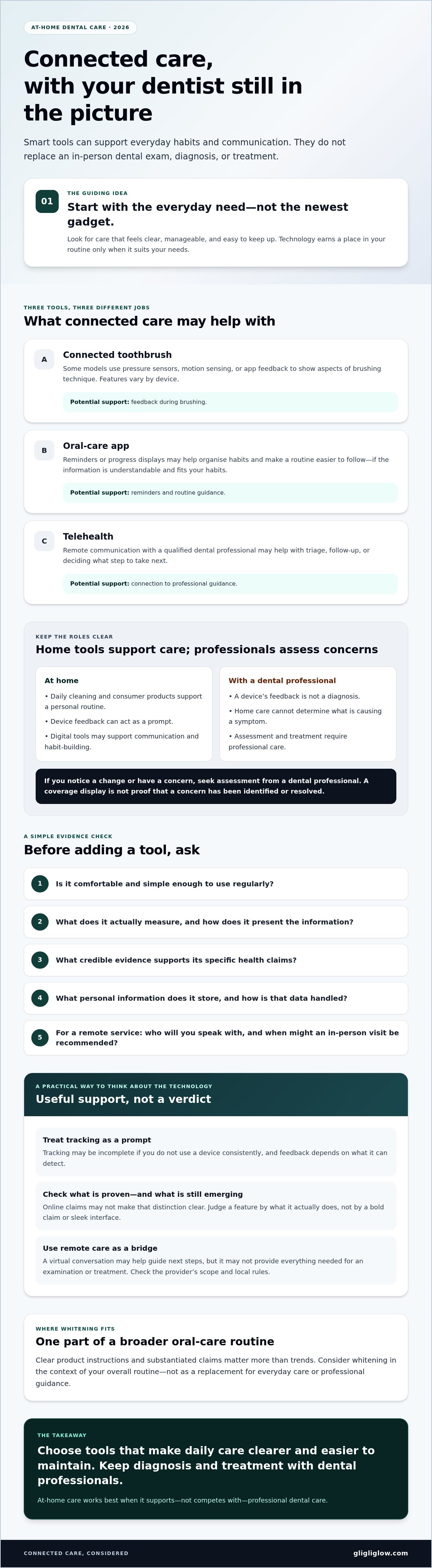
Daily cleaning and consumer oral-care products can support a consistent personal routine. They can’t determine what’s causing a symptom, and a device’s feedback isn’t a diagnosis. If you notice a change or have a concern, seek assessment from a dental professional. Home care and professional care have different roles, and a new tool doesn’t replace an exam when one is needed.
Why convenience and personalisation are shaping the conversation
Busy mornings and tired evenings can make a straightforward routine more realistic than a complicated one. That’s why accessible tools and easy-to-follow guidance attract interest. Personalisation might mean adapting reminders or feedback to a user’s habits. It doesn’t guarantee better oral health or a particular result.
Before adding technology, ask practical questions: Is it comfortable and simple enough to use regularly? What evidence supports its specific claims? If it collects personal information, what data does it store, and how is that data handled? These questions help distinguish a useful fit from a trend that looks appealing but adds little to your routine.
Connected at-home dental care means using digital tools to support everyday oral-care habits and communication with dental professionals, not to replace clinical assessment. Use that as your guide to the future of at-home dental care: start with what you need, then decide whether the technology earns a place in your routine.
How Smart Devices, Apps, and Telehealth Could Shape Home Care
Digital oral-care tools don’t all do the same job. A connected toothbrush may offer feedback during brushing, an app may help organise habits, and telehealth lets patients communicate with a dental professional remotely. Judge each feature by what it actually does, not by what a sleek interface or bold claim suggests.
Smart toothbrushes and oral-care apps
Some smart toothbrushes use pressure sensors, motion sensing, or app-based feedback to show aspects of brushing technique. Features vary by device, so check the product information rather than assuming every model tracks the same things. An app might make a routine easier to follow with reminders or progress displays, but those features help only if they’re understandable and suit your habits.
Treat the data as a prompt, not a verdict. Tracking can be incomplete if you don’t use the device consistently, and feedback depends on what the device can detect. A coverage display, for example, isn’t proof that a dental concern has been identified or resolved. Before choosing a tool, ask what it measures, how it presents the information, and whether its health claims are supported by credible evidence.
Remote dental advice and connected care
Telehealth allows people to consult a qualified dental professional remotely. Depending on the service and concern, a conversation or shared information may help with triage, follow-up, or deciding what step to take next. Remote contact may not provide everything needed for an examination or treatment. The American Dental Association's teledentistry policy offers professional guidance on this area; check local rules and the provider’s scope before relying on a virtual service.
What a service can provide varies, so confirm who you’ll speak with, how your information will be handled, and when an in-person visit may be recommended. Connected care works best as a bridge to professional guidance, not as a substitute for clinical judgement.
Digital tools can support oral-care routines and connect people with dental professionals, but they don’t replace clinical judgement. That’s a useful way to think about the future of at-home dental care: welcome features that make everyday habits easier, while leaving diagnosis and care decisions to professionals.
If you’re also exploring consumer oral-care products, you can review GLI GLI’s at-home whitening options as a separate part of a personal-care routine.
Which At-Home Dental Innovations Are Useful, and Which Need Caution?
A feature can make a routine easier without proving a clinical benefit. Keep that distinction in mind as you compare familiar tools, connected devices, and newer AI claims. For broader context on trends that will shape the future of dentistry, remember that developments in professional dentistry don’t automatically prove benefits from consumer products.
Use the table as a starting point, not a product endorsement. Features and evidence vary by device, app, and service, so check claims for the specific tool you’re considering.
| Tool | Intended use | Evidence to check | Key limitation |
|---|---|---|---|
| Basic cleaning tools | Support everyday brushing and cleaning between teeth. | Clear instructions and guidance from credible dental sources. | They support a routine, but don’t assess symptoms or diagnose conditions. |
| Connected toothbrush | Offer features such as pressure or motion sensing and brushing feedback. | Which feature the device actually provides, what it measures, and how its claims are supported. | Feedback may be incomplete, especially if use is inconsistent; tracking isn’t a diagnosis. |
| Oral-care app or AI feature | Provide reminders, displays, or personalised prompts, depending on the app. | What information informs the guidance, who it’s designed for, and whether relevant research supports the specific claim. | “Personalised” doesn’t guarantee better results. Data quality and privacy also matter. |
| Remote dental consultation | Let a patient communicate with a dental professional remotely. | The provider’s qualifications, service scope, and guidance on follow-up care. | Remote advice may not replace an examination or in-person care. |
How to judge evidence behind a new oral-care tool
Look beyond testimonials and promotional language. Check whether claims link to relevant research, identify the tool’s intended use, and explain who was studied. Evidence for one feature or group of users may not apply to another. If a concern is persistent, painful, or changing, ask a dental professional rather than relying on an app or device to interpret it.
Convenience is not the same as clinical value
A reminder that fits your day may be genuinely handy. That doesn’t prove a device’s other advertised features improve oral health. Before adopting connected technology, consider whether it’s easy to use and maintain, as well as any cost and privacy trade-offs. If evidence is preliminary, mixed, or unavailable, treat the benefit as uncertain, not established.
A useful innovation earns its place by supporting a real routine, with clear evidence for the specific feature it claims to offer. Apply that practical filter to the future of at-home dental care: welcome convenience, but don’t confuse a polished dashboard or AI label with clinical proof.
Preparing for the Future of At-Home Dental Care
You don’t need to adopt every new device to care for your smile thoughtfully. A quick check before buying or using a tool can help you choose one that fits your life, has clear support for its claims, and doesn’t distract from professional dental care.
A simple checklist before trying a new device or service
Pause before adding a tool to your routine. Run through these checks first:
- 1. Get clear on its purpose. Is it meant to support a daily habit, share information, or provide remote communication? Don’t assume it can diagnose or treat a condition.
- 2. Check the claim. Look for dependable evidence about the specific feature being promoted, not just testimonials or general claims about innovation.
- 3. Read the instructions and limitations. Make sure you understand how to use the tool, what it can’t do, and when its guidance may not apply.
- 4. Review privacy details. If it uses an app or collects information, find out what data it handles and how that information is used.
- 5. Keep professional care in your plan. A gadget isn’t a substitute for a dental professional’s assessment. Ask for advice about concerns instead of relying on a device to interpret them.
Make new tools fit a realistic routine
The best choice is one you can use comfortably and consistently. A reminder may help if it nudges you at the right moment. If alerts or tracking become distracting, they may not add value. Look for clear instructions and a manageable routine, not promises of effortless results.
Thinking about whitening? Treat it as a personal-care choice, separate from routine dental assessment. For product-specific buying considerations, read this at-home teeth whitening kit guide. If sensitivity is a concern, the sensitive whitening strips guide offers another place to start, but seek professional advice about persistent discomfort.
Small, realistic choices matter more than chasing every trend. If you’re considering whitening as part of your routine, explore GLI GLI at-home whitening products and review the product instructions and claims before deciding what suits you.
Where At-Home Whitening Fits in the Future of Dental Care
Whitening can be part of a personal-care routine, but it’s only one category within at-home oral care. It doesn’t replace daily cleaning, professional assessment, or treatment when needed. As new products and trends appear, separate the appeal of a brighter smile from claims about what a product can do.
What the future may mean for at-home whitening
Consumer-focused developments may make it easier to compare products, understand instructions, and find guidance that suits a routine. But convenience isn’t proof of better whitening. An LED feature, for example, shouldn’t be assumed to improve results unless reliable evidence supports that claim for the specific product. Be cautious with promises that sound certain or universal: outcomes and suitability can vary, and marketing language isn’t a substitute for substantiated information.
Before choosing a product, read its directions and check the claims that matter to you. Look for clear information about intended use, ingredients, and precautions. If you have questions about whether whitening is appropriate for you, or you’re experiencing oral-health concerns, ask a dental professional. At-home whitening products aren’t a replacement for professional assessment.
Explore at-home whitening with clear expectations
GLI GLI sells at-home whitening kits, gel refills, pens, and LED devices. These products sit within the consumer whitening category, not clinical dental care. Compare the information provided for each product and follow its instructions rather than relying on trend-driven promises. Check product features, safety statements, and any guarantee wording against the current product details before making a decision.
The future of at-home dental care may bring new ways to discover and use consumer products, but thoughtful choices still begin with clear expectations. Whitening can complement a wider personal-care routine when it’s a suitable choice for you. It shouldn’t distract from routine dental care or be treated as a solution to symptoms.
Curious about the options? Explore GLI GLI at-home whitening and review the product details before deciding what fits your routine.
Build a Smarter Routine, One Thoughtful Choice at a Time
The future of at-home dental care isn’t about replacing dental professionals with gadgets. It’s about using practical tools to support everyday habits, checking the evidence behind new features, and knowing when a concern calls for professional advice. Smart feedback, apps, and remote consultations may add convenience, but their value depends on what they can reliably do and whether they suit your routine.
Whitening has its place as one consumer-care choice within a broader approach to oral health. GLI GLI sells at-home whitening kits and maintenance products, including options such as gel refills, pens, and LED devices. As with any product, review its instructions and claims, and don’t treat whitening as a substitute for dental assessment.
Ready to explore whitening options with clear expectations? Explore GLI GLI at-home whitening products. Keep your routine realistic, stay curious about new tools, and choose what helps you care for your smile with confidence.
Frequently Asked Questions
What is the future of at-home dental care?
The future of at-home dental care is likely to include more connected tools, digital guidance, and options that help people manage daily routines. The benefits depend on the specific product and the evidence behind its claims. A smart device may support self-care, for example, but it shouldn’t replace a dental professional, an examination, or personalised clinical advice.
Can smart toothbrushes improve your oral-care routine?
Smart toothbrushes may offer reminders, tracking, or brushing feedback, depending on the device. These features may help some people build a consistent routine, but they don’t guarantee better oral health. Before choosing one, check exactly what it measures, whether the feedback is easy to understand, how it handles personal data, and whether its health-related claims are supported by reliable evidence.
Will AI replace dentists in the future?
No. AI may become part of digital tools that organise information or support communication, but it shouldn’t be considered a replacement for a dentist. Assessing oral health can require professional judgement and an examination. Treat automated suggestions as limited guidance, not a diagnosis or care plan. If you have symptoms, concerns, or questions about treatment, contact a qualified dental professional.
Are at-home dental care devices safe to use?
Safety depends on the specific device, its intended use and instructions, and the person using it. Read the product guidance and check health-related claims before trying a new tool. If you have pain, sensitivity, an existing dental concern, or uncertainty about whether a device is suitable, ask a dental professional. Don’t rely on a gadget or general online advice to assess an individual concern.
Can online dental consultations replace an in-person appointment?
Not in every situation. A remote consultation can make it easier to communicate with a dental professional, but it may not allow a full examination or provide everything needed to assess a concern. The right format depends on your question and the clinician’s advice. If an in-person visit is recommended, or symptoms need examination, follow that guidance rather than relying solely on a virtual consultation.
How should I choose a new at-home oral-care product?
Start by checking the product’s intended use, instructions, limitations, and evidence for its specific claims. Consider whether it fits your routine and, for connected tools, how personal information is handled. A newer or more connected product isn’t automatically more effective. If you have a persistent concern or aren’t sure whether a product suits you, ask a dental professional before changing your care routine.
Will at-home teeth whitening become part of digital dental care?
At-home whitening may be part of broader consumer oral-care routines, and some products may offer digital guidance or connected features. Their presence alone doesn’t establish clinical benefit or suitability for everyone. Follow the product’s instructions and check claims carefully. If you have concerns about whitening or your oral health, ask a dental professional before using a product. Whitening isn’t a substitute for dental assessment.


