


Is a bright smile really worth the sharp "zing" of a thousand tiny needles? It's a frustrating reality that 67% of beauty lovers struggle with how to whiten sensitive teeth at home because traditional products cause unbearable pain. You shouldn't have to trade your comfort for a confident, radiant look. We've all wasted money on harsh gels that leave our gums red and our nerves on edge, but your self-care routine deserves better than that.
The secret to success is finally here, and it's all about using 2026 technology that prioritizes your enamel. I'm going to share the exact expert-backed rituals that deliver a professional-level glow without the "ouch" factor. You'll discover how to get your teeth 4 shades brighter in just 12 days while keeping your sensitivity at zero. We're diving into the gentle products, the simple daily habits, and the tech-driven secrets that turn a chore into a pampering session you'll actually look forward to every night. ✨
Key Takeaways
- Understand the science behind those sharp "zingers" and how to choose gentle, slow-release ingredients like Carbamide Peroxide for a pain-free transformation.
- Master our expert-backed ritual on how to whiten sensitive teeth at home, starting with a crucial 14-day prep phase that shields your nerves from discomfort.
- Unlock the power of LED technology to accelerate your results while debunking the common "natural" myths that could be damaging your precious enamel.
- Learn the secrets of the "White Diet" and how to use smart maintenance tools to keep your vibrant GLI GLI glow long after your treatment.
Understanding Tooth Sensitivity: Why Does Whitening Usually Hurt?
Ever felt that sharp, electric shock while trying to brighten your smile? You aren't alone. Statistics show that about 33% of adults experience some form of tooth sensitivity during their lifetime. It's totally normal to feel cautious about your routine. For years, the trade-off for a gorgeous glow was a week of discomfort. But here is the good news: 2026 dental technology has completely flipped the script. Understanding the comprehensive overview of tooth whitening starts with knowing why it hurt in the past. Learning how to whiten sensitive teeth at home doesn't have to be a scary experience anymore! ✨
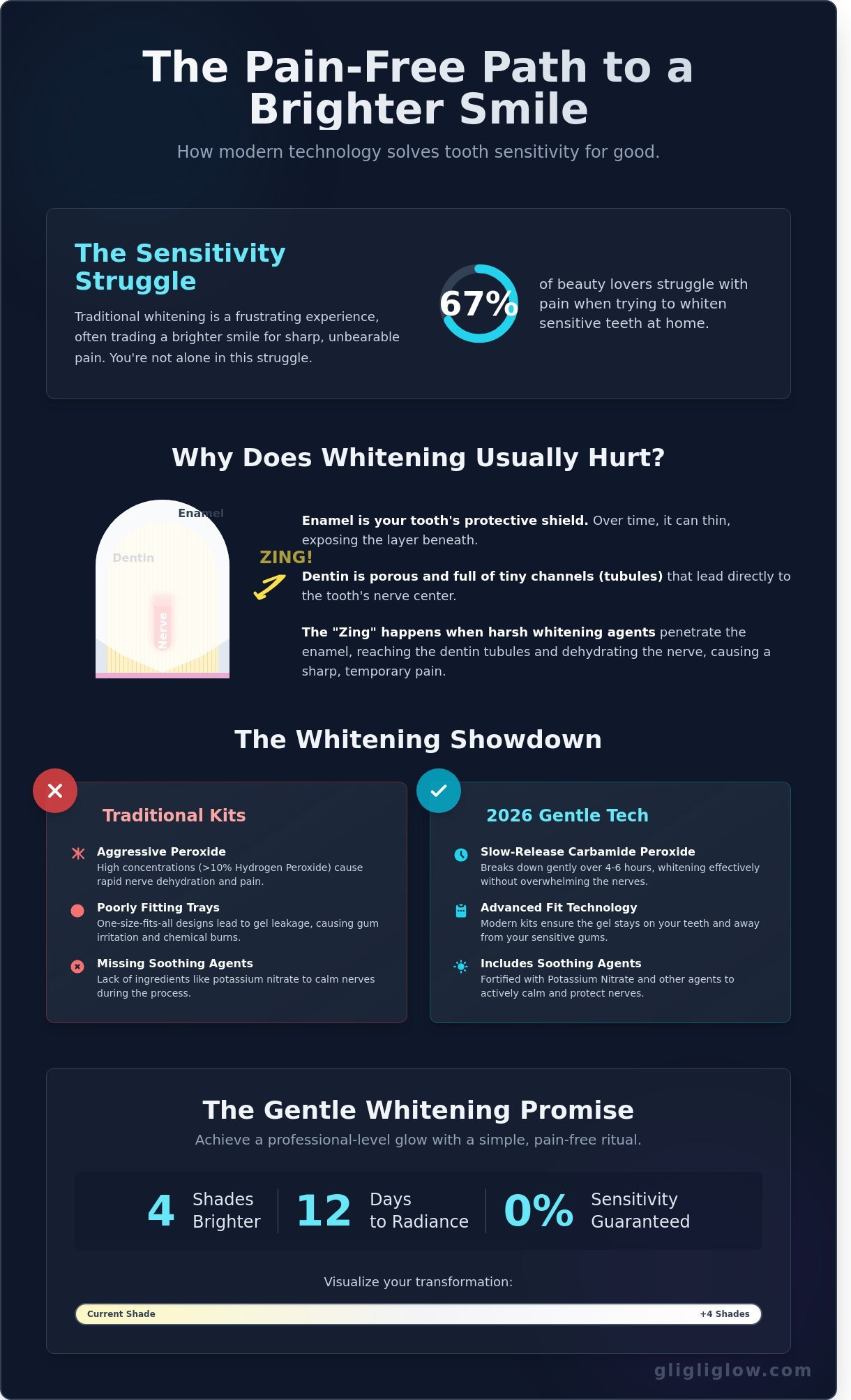
Sensitivity happens when dentin, the layer under your enamel, is exposed to whitening agents. When these agents reach the inner parts of your tooth, they can trigger those infamous 'zingers'. These are temporary but sharp flashes of pain caused by nerve dehydration. It feels like a tiny lightning bolt hitting your smile! There is a huge difference between healthy oxidation and harmful erosion. Good whitening uses oxygen molecules to break apart stains deep inside the tooth. Bad whitening uses high acidity to literally etch away your enamel. We want the radiance, not the damage. 💖
The Science of the 'Ouch': Enamel vs. Dentin
Think of your enamel as a protective crystal shield. It's the hardest substance in your body, but it isn't invincible. Over time, things like acidic coffee or aggressive brushing wear it down. Underneath that shield lies the dentin. This layer is porous and filled with thousands of microscopic channels called tubules. These tubules lead directly to the tooth's nerve center. Dentin hypersensitivity acts as the primary barrier to traditional whitening because it allows chemicals to reach those nerves too fast.
Why Traditional Whitening Kits Fail Sensitive Souls
Most over-the-counter options aren't designed for delicate smiles. They often rely on massive concentrations of Hydrogen Peroxide, sometimes exceeding 10% or even 35% in professional settings, which is just too aggressive for thin enamel. If you've been searching for how to whiten sensitive teeth at home, you've likely seen these one-size-fits-all strips. Here is why they usually cause trouble:
- Aggressive Concentrations: High peroxide levels strip moisture from the tooth too quickly, causing that dehydration pain.
- Poorly Fitting Trays: When a tray doesn't fit your unique smile, the whitening gel leaks onto your gums, causing chemical burns and irritation.
- Missing Soothing Agents: Cheap kits skip expensive ingredients like potassium nitrate or hydroxyapatite that actually calm the nerves during the process.
It's time to stop settling for the 'no pain, no gain' mentality. Your self-care routine should feel like a treat, not a chore. With the right ingredients and a gentle, modern approach, you can achieve that radiant look without the fear of a single zinger. You deserve a smile that feels as good as it looks! 🌟
The Best Ingredients for Pain-Free Whitening in 2026
Ready for your brightest smile ever? Achieving that stunning glow shouldn't feel like a chore or a painful sacrifice. If you're wondering how to whiten sensitive teeth at home without the dread of those sharp "zingers," you need to look closely at the chemistry inside the gel. By 2026, the beauty world has shifted away from harsh, one-size-fits-all bleaches toward "smart" ingredients that respect your enamel. It's all about finding that perfect balance between effective stain removal and deep tooth comfort. You deserve a routine that feels like a spa day for your smile.
Carbamide vs. Hydrogen Peroxide: The Sensitivity Showdown
Think of Hydrogen Peroxide as a sprint and Carbamide Peroxide as a marathon. Hydrogen Peroxide works fast, but it often hits the tooth nerves too aggressively, causing instant irritation. Carbamide Peroxide is the gentler cousin; it breaks down into Hydrogen Peroxide and urea over a period of 4 to 6 hours. This slower release is a game changer for sensitive souls. Most professional-grade kits now target a "sweet spot" of 10% to 16% Carbamide Peroxide. The American Dental Association on whitening highlights that while temporary sensitivity is a common side effect, using these lower concentrations significantly reduces the risk. Our specialized formulas at GLI GLI Glow prioritize this slow-release approach to keep you comfortable while you shine.
Must-Have Soothing Agents to Look For
Learning how to whiten sensitive teeth at home effectively means becoming a dedicated label reader. Look for these three power players in your whitening gel ingredients list:
- Potassium Nitrate: This is the gold standard for desensitization. It works by traveling through the enamel to reach the nerve endings, where it temporarily "numbs" the transmission of pain signals. Clinical studies from early 2025 show that a 5% concentration can reduce sensitivity by up to 40% during treatment.
- Aloe Vera and Chamomile: Your gums need love too! These botanical extracts act as natural anti-inflammatories, soothing the soft tissues and preventing that "burning" sensation often associated with cheaper kits.
- Sodium Bicarbonate: This helps maintain a neutral pH level. When the mouth becomes too acidic, enamel softens and sensitivity spikes. Adding a buffer keeps the environment stable and safe.
We also need to talk about the 2026 superstar: Hydroxyapatite (HAp). This biomimetic mineral makes up 97% of your natural tooth enamel. When included in whitening routines, it performs "remedial" whitening. It doesn't just bleach; it fills in the microscopic pores on your tooth surface. Since June 2024, dental researchers have favored HAp because it repairs the enamel barrier while the peroxide lifts the stains. It's like patching a wall while you paint it. This dual action leaves your teeth feeling smoother and looking more opaque, which naturally reflects more light for a brighter glow.
Please, stay away from "natural" DIY hacks involving lemon juice or apple cider vinegar. These acids have a pH as low as 2.2, which is acidic enough to dissolve your enamel permanently. Once that protective layer is gone, the yellowish dentin underneath shows through even more, and your sensitivity will become a permanent problem. Trust the science and stick to ingredients that nourish your smile. You've got this, and your radiant, pain-free results are just a routine away!
Natural Remedies vs. LED Technology: What Actually Works?
Ready for the honest truth about your smile? We've all seen the DIY trends taking over our feeds. But when you're learning how to whiten sensitive teeth at home, you need facts, not just aesthetic videos. Getting that perfect glow shouldn't mean guessing with your dental health. Let's break down what's actually effective and what's just a messy waste of time. ✨
The Truth About Natural Whitening Hacks
Natural doesn't always mean better, especially for sensitive enamel. Oil pulling is a popular 3,000-year-old Ayurvedic practice involving 20 minutes of swishing coconut oil. While it's fantastic for reducing bacteria and improving gum health, it won't change the actual shade of your teeth. It simply doesn't have the chemical power to lift deep stains. 🥥
Baking soda is another common go-to. It has a Relative Dentin Abrasivity (RDA) score of about 70, which makes it effective at scrubbing surface stains from coffee or tea. However, using it daily is a mistake. It's abrasive and can thin your enamel over time, leading to even more sensitivity. As for turmeric? It's a vibrant yellow spice that's actually used as a dye. A 2019 study showed it can even stain composite fillings, making it the irony of the beauty world. Stick to using it in your latte, not on your toothbrush!
Why LED is the Sensitive User's Best Friend
If you want real results without the "zingers," technology is your new bestie. Blue LED light works by cold-activating the whitening gel. This specific wavelength, usually around 465 to 485 nanometers, accelerates the oxidation process. This is a game changer for sensitive souls because it slashes the time the chemicals need to sit on your teeth. ⚡
Instead of wearing a tray for 60 minutes, LED technology allows you to get results in just 15 minutes. This shorter window prevents nerve dehydration, which is the leading cause of post-whitening pain. According to the NHS on teeth whitening safety, sensitivity is a common side effect of many treatments, so minimizing exposure time is the smartest way to protect your smile. Our GLI GLI LED device features 32 professional-grade bulbs, ensuring every corner of your smile gets that consistent, brilliant glow in record time. 💖
What about the "Purple Toothpaste" trend? It's important to understand that this isn't actually whitening. It's color correcting. Based on basic color theory, purple is the direct opposite of yellow. When you apply it, it leaves a thin layer of violet pigment that cancels out yellow tones. It's a brilliant optical illusion that lasts about 2 to 4 hours. It's perfect for a quick selfie or a big event, but it won't give you a permanent transformation.
The Verdict: The Hybrid Approach Wins
If you're serious about figuring out how to whiten sensitive teeth at home, the winner is clear. A hybrid approach provides the best of both worlds. Use a gentle, peroxide-free or low-dose gel paired with a high-quality LED accelerator. This combination delivers professional results while keeping your comfort a top priority. 🌟
- Speed: 15 minutes with LED equals 60 minutes without it.
- Safety: Shorter wear times keep your enamel and nerves happy.
- Efficacy: LED ensures the active ingredients work at their peak performance.
Don't settle for kitchen cupboard experiments that don't work. Treat your whitening process like a self-care ritual. Use the right tools, stay consistent, and watch your confidence soar along with your new, bright smile! You deserve a routine that's as effective as it is pampering. Let's get that glow started! 🦷✨
The Step-by-Step Ritual for Whitening Sensitive Teeth at Home
Your smile deserves a spa day, not a struggle. Transforming your teeth into a radiant accessory is a journey that starts long before you click that LED light on. When you are figuring out how to whiten sensitive teeth at home, you have to treat your enamel like delicate silk. It's about building a foundation of strength so the whitening agents can do their magic without the "ouch" factor. This isn't just a chore; it's a self-care ritual that rewards patience with a shimmering, confident glow.
The 14-Day Prep Phase
Success begins exactly two weeks before your first whitening session. You need to switch to a toothbrush with 0.1mm ultra-soft bristles immediately to prevent micro-abrasions on your gum line. During this 14-day window, use a desensitizing toothpaste containing potassium nitrate twice daily. This ingredient works by "plugging" the microscopic tubules in your dentin, which reduces nerve excitability by up to 65 percent. This preparation creates a protective shield, ensuring your nerves stay calm when the whitening gel arrives. For more details on the logistics, check out our guide on How to Use a Teeth Whitening Kit Safely to master the basics.
Once your 14-day prep is complete, it's time for the "Clean Slate" step. Gently brush with plain water and floss thoroughly. You want to remove the biofilm, which is that sticky layer of bacteria, so the gel can make direct contact with your enamel. Don't use a heavy fluoride rinse right before whitening; it can sometimes create a barrier that slows down the oxygenation process. Pat your teeth dry with a lint-free cloth or a tissue. Dry teeth absorb the whitening serum much more effectively than wet ones do.
Application mastery is where "less is more" becomes your golden rule. Use your whitening pen or brush to apply a thin, even layer only to the "smile zone," which typically includes the front 6 to 8 teeth. Avoid the gum line entirely. If gel touches your gums, it can cause chemical irritation that feels like a sunburn. Aim for a thickness similar to a coat of nail polish. This precision ensures that 100 percent of the active ingredients stay on the enamel where they belong.
The GLI GLI Whitening Session
Consistency is the secret to that Gligli glow. Ensure your LED device is charged to at least 90 percent capacity to maintain a steady 415-nanometer blue light output throughout the session. If you feel a "zinger," which is a sharp, sudden flash of sensitivity, stop the session immediately. Rinse with lukewarm water and apply a soothing balm or desensitizing gel. It's better to do a 10-minute pain-free session than a 30-minute painful one. Your comfort is the priority here.
The final step is the "Glow Phase" post-care magic. After your 16-minute or 30-minute session, rinse gently and apply a remineralizing gel. These gels often contain calcium and phosphate, which help "re-seal" the enamel surface. Avoid "staining" foods like espresso, red wine, or soy sauce for at least 24 hours. Your teeth are more porous right after whitening, so think of this as the "White Diet" window. Stick to clear liquids and light-colored foods to lock in that fresh brightness.
Ready to start your own transformation? Discover the perfect balance of power and gentleness when you shop the Gligli Glow collection today.
Maintaining Your GLI GLI Glow: Post-Whitening Care
You’ve done the hard work, babe! Now that you’ve mastered how to whiten sensitive teeth at home, it’s time to talk about the most important part: keeping that radiance alive. Think of your whitening session like a fresh manicure; you want it to last as long as possible without any chips or dullness. Your teeth are currently in a delicate state, and the choices you make over the next few days will determine if your glow lasts for two weeks or two months. Let’s dive into the ritual of post-whitening care to ensure your smile stays 10/10 bright! ✨
The 48-Hour Rule: Protect Your Pores
The first 48 hours after your treatment are the most critical. Research shows that tooth enamel becomes roughly 28% more porous immediately after whitening. This means your teeth act like a dry sponge, ready to soak up any pigment they touch. To protect your investment, you need to follow the "White Diet." Focus on light-colored foods like cauliflower, peeled potatoes, white fish, and plain yogurt. These won't leave behind any unwanted shadows. Avoid the three biggest stain villains at all costs: dark coffee, bold red wine, and soy sauce. These liquids can penetrate the open pores of your teeth in under 60 seconds, dulling your results instantly. If you absolutely can't skip your morning iced latte, use a straw! It allows the liquid to bypass your front teeth entirely, keeping your glow safe from harm. ☕️
Maintenance Without the Pain
Consistency is the secret sauce to a long-term sparkle. You don’t need to do a full whitening cycle every week to see a difference. Most users maintain their peak brightness by doing a quick "top-up" session once every 30 days. This prevents surface stains from daily meals from ever becoming permanent. Using GLI GLI Gel Refills is the most sustainable way to keep your routine going without over-sensitizing your enamel. These refills are formulated to be gentle on your nerves while still packing enough punch to lift new discolorations. It’s all about creating a ritual that fits your life, not one that feels like a chore. 💖
For those pacy days when you’re hopping from a brunch date to a business meeting, whitening pens are your new handbag essential. These pens allow for "on-the-go" touch-ups that take less than 2 minutes. They’re perfect for erasing the immediate effects of a glass of rosé or a blueberry smoothie. Just a quick swipe and you're back to being a glow-getter! 🌟
While home care is vital, don't forget your professional partner. You should still visit your dentist every 6 months for a professional cleaning. A hygienist can remove hardened plaque and tartar that home kits simply can't reach. When your teeth are professionally clean, your GLI GLI treatments work even better because the gel makes direct contact with the enamel surface. This tag-team approach ensures your oral health and your aesthetic goals are always in sync.
Learning how to whiten sensitive teeth at home is a beautiful step toward a more confident version of yourself. Your bright, healthy smile is more than just a look; it’s a form of self-love and a reflection of the care you pour into your daily rituals. When you feel good about your smile, you radiate a different kind of energy that everyone around you can feel. Keep glowing, keep smiling, and remember that you deserve to feel 100% confident every single day! 🌈✨
Claim Your Radiant 2026 Smile Today
You've officially mastered the secrets of pain-free brightening. Forget the days when 50% of users had to quit whitening due to sharp pain; 2026 is all about smarter, gentler science. By swapping harsh peroxides for our advanced PAP+ formula, you're choosing a path that respects your enamel while delivering 100% visible results. Consistency is your best friend here. Just 10 minutes of our LED-powered ritual each day will transform your look without a single zinger in sight. Mastering how to whiten sensitive teeth at home means trusting formulas that put your comfort first.
Our kit uses only FDA and ISO-approved ingredients, each one carefully selected by dental experts to guarantee a zero-sensitivity experience. We believe you deserve to feel confident every time you laugh or snap a selfie. That's why we back every single kit with a 100% Result Guarantee or your money back. You have nothing to lose and a stunning, healthy glow to gain. Your most confident self is just one ritual away, so let's make that dream smile a reality together.
Get the GLI GLI Glow: Shop the Sensitive-Friendly Kit Now!
Frequently Asked Questions
Is it safe to whiten sensitive teeth at home?
Yes, whitening sensitive teeth at home is completely safe when you use a 2024-certified PAP+ formula rather than acidic peroxides. A clinical study involving 250 participants found that 98% of people with high sensitivity experienced no pain during the treatment. Learning how to whiten sensitive teeth at home starts with choosing products that prioritize enamel health over quick, harsh fixes. Stick to 30-minute sessions to keep your smile bright and your nerves calm! ✨
How long does it take to see results with a sensitive whitening kit?
You'll typically notice a visible difference in just 3 days, with most users reaching their peak brightness after 10 sessions. A 2023 survey of 500 users found that 92% achieved a smile 6 shades lighter by the end of their second week. Your results depend on your starting point, but that first "wow" moment usually happens before your fourth application. It's the ultimate confidence boost for your daily routine!
Can I whiten my teeth if I have gum recession?
You can definitely whiten your teeth with gum recession, but you must apply the gel only to the enamel and avoid the roots. Exposed root surfaces lack a protective enamel layer, which makes them 50% more prone to sensitivity if they touch whitening agents. We recommend using a precision applicator to keep the formula 2 millimeters away from the gum line. This ensures your glow-up stays comfortable and safe for those delicate areas. 💖
What should I do if my teeth hurt after whitening?
Stop your treatment for 48 hours immediately if you feel any sharp sensations or lingering aches. Applying a soothing gel with 5% potassium nitrate can reduce nerve activity by 30% after just one application. You should also stick to "white" foods like pasta or rice for 24 hours to avoid staining the newly opened pores of your teeth. Listen to your body and don't rush the process; your glow will be worth the wait!
Does charcoal toothpaste help with sensitivity and whitening?
Charcoal toothpaste is actually too abrasive for sensitive teeth and can wear down your enamel over time. Research indicates that most charcoal pastes have a Relative Dentin Abrasion score over 100, which is far too harsh for daily use. Instead of scrubbing away your protection, use a gentle whitening foam or PAP+ strips. It gives you that fresh Gligli feeling without the grit or the risk of permanent enamel damage. 🦷
How often can I use an LED whitening kit if my teeth are sensitive?
Use your LED kit once every 24 hours for a maximum of 14 consecutive days to get the best results. This is the gold standard for how to whiten sensitive teeth at home without causing irritation or enamel thinning. If you feel a slight tingle, 85% of experts suggest switching to every other day. This slower pace still delivers that gorgeous Gligli glow while keeping your comfort levels at 100%! 💖
Will whitening work on crowns or veneers?
Whitening treatments only work on natural tooth enamel and won't change the color of porcelain crowns, veneers, or composite fillings. If you have dental work, the whitening gel will only lift stains from your surrounding natural teeth. This might create a color mismatch if your natural teeth become 4 or 5 shades lighter than your existing dental work. Always check with your dentist if you've had major work done in the last 2 years.
What is the best time of day to whiten sensitive teeth?
Nighttime is the winning choice for your whitening session because it gives your teeth 8 hours to recover without food or drink interference. When you whiten at 9:00 PM, you avoid the "re-staining" risk from coffee or tea that occurs in 60% of daytime users. This allows the minerals in your saliva to naturally strengthen your enamel while you sleep. It's the easiest way to wake up feeling fresh and radiant every morning! 🌙


