


What if your favorite "natural" kitchen hack is actually melting your smile away? 🍋 We’ve all been there, scrolling through social media and seeing those viral DIY videos promising a Hollywood glow for just pennies. It sounds like the perfect, easy solution when professional dental treatments feel way too expensive! But before you reach for that yellow fruit, you must understand the serious baking soda and lemon for teeth whitening risks that those 30-second clips never show you.
It’s totally normal to want a brighter, more confident look, and we love a good self-care ritual as much as you do! ✨ However, a DIY hack isn't "natural" if it destroys your natural enamel. Once that protective layer is gone, it’s gone for good. In this guide, you’ll discover why this acidic remedy is actually a recipe for permanent dental damage and painful sensitivity. We’ll break down the science of pH levels and show you how to get that stunning, fresh-from-the-dentist result using safe, expert-backed methods that protect your beautiful smile. Ready to glow the right way? Let’s dive in! 💎
Key Takeaways
- Stop the kitchen-counter chemistry and learn why that viral "natural" hack is actually a recipe for permanent enamel loss.
- Get the facts on pH levels and see why acidic lemon juice creates a "danger zone" that softens your teeth instantly.
- Uncover the hidden baking soda and lemon for teeth whitening risks that lead to chronic sensitivity and thinning teeth.
- Upgrade your self-care ritual with modern, LED-powered solutions like the GLI GLI Teeth Whitening Kit for a safe, professional-grade glow.
The Viral Allure of Baking Soda and Lemon: Why It’s Not a Glow-Up
We all want that radiant, camera-ready smile that lights up the room! ✨ It's the ultimate confidence booster, and in a world where we're always snapping photos, feeling good about your pearly whites is a huge part of self-love. But with professional dental treatments often feeling out of reach for many, it's no wonder that "natural" DIY hacks are taking over our social media feeds. The most famous one? Mixing a little sodium bicarbonate (good old baking soda) with a squeeze of fresh lemon juice. It sounds so simple, so organic, and so affordable. But behind that satisfying fizz lies a hidden danger that could change your smile forever.
The psychological trap of the 2026 wellness culture is real. We've been taught that if it's in our pantry, it must be better for us than something made in a lab. Unfortunately, being unaware of the baking soda and lemon for teeth whitening risks means you might accidentally trade your long-term health for a temporary, superficial sparkle. When you mix these two, you're creating a harsh chemical reaction. While it might look like it's working because it strips away surface stains, it's actually just grinding down your tooth structure. If you don't understand the baking soda and lemon for teeth whitening risks, you're essentially using a chemical peel on your teeth without a neutralizer. 🛑
The "Natural" Misconception in Oral Care
Your kitchen ingredients are amazing for baking or salads, but they aren't formulated for the delicate balance of your mouth. There's a massive difference between food-grade safety and dental-grade standards. While baking soda is a great household cleaner, it's incredibly abrasive for your teeth. When you dive into the science of tooth whitening, you'll see that professional products are carefully pH-balanced to protect your structure, unlike raw lemon juice which is highly acidic. Enamel is the hardest, most mineralized substance in your body, but it's also completely non-renewable, meaning once it's gone, your body can't grow it back.
Why Social Media Hacks Can Be Deceptive
Have you ever noticed how every DIY "before and after" has perfect ring lighting? 💡 Those 15-second clips are masters of illusion. They show you the immediate "glow-up" but never the follow-up video three months later when the person can't drink a cold glass of water without wincing in pain. Filters can easily hide the yellowing dentin that starts to show through as your enamel thins from the acid and grit. We believe in a mindful, conscious approach to your at-home teeth whitening rituals. True self-care is about using high-quality ingredients that give you a vibrant result without the dental emergency. You deserve a routine that feels like a treat, not a threat! 💖
Beyond external care, supporting your body's energy levels with high-quality natural supplements is another way to maintain that healthy glow; learn more about Gara Health and their focus on vitality. ✨
The Chemistry of Damage: Enamel Erosion and Mechanical Abrasion
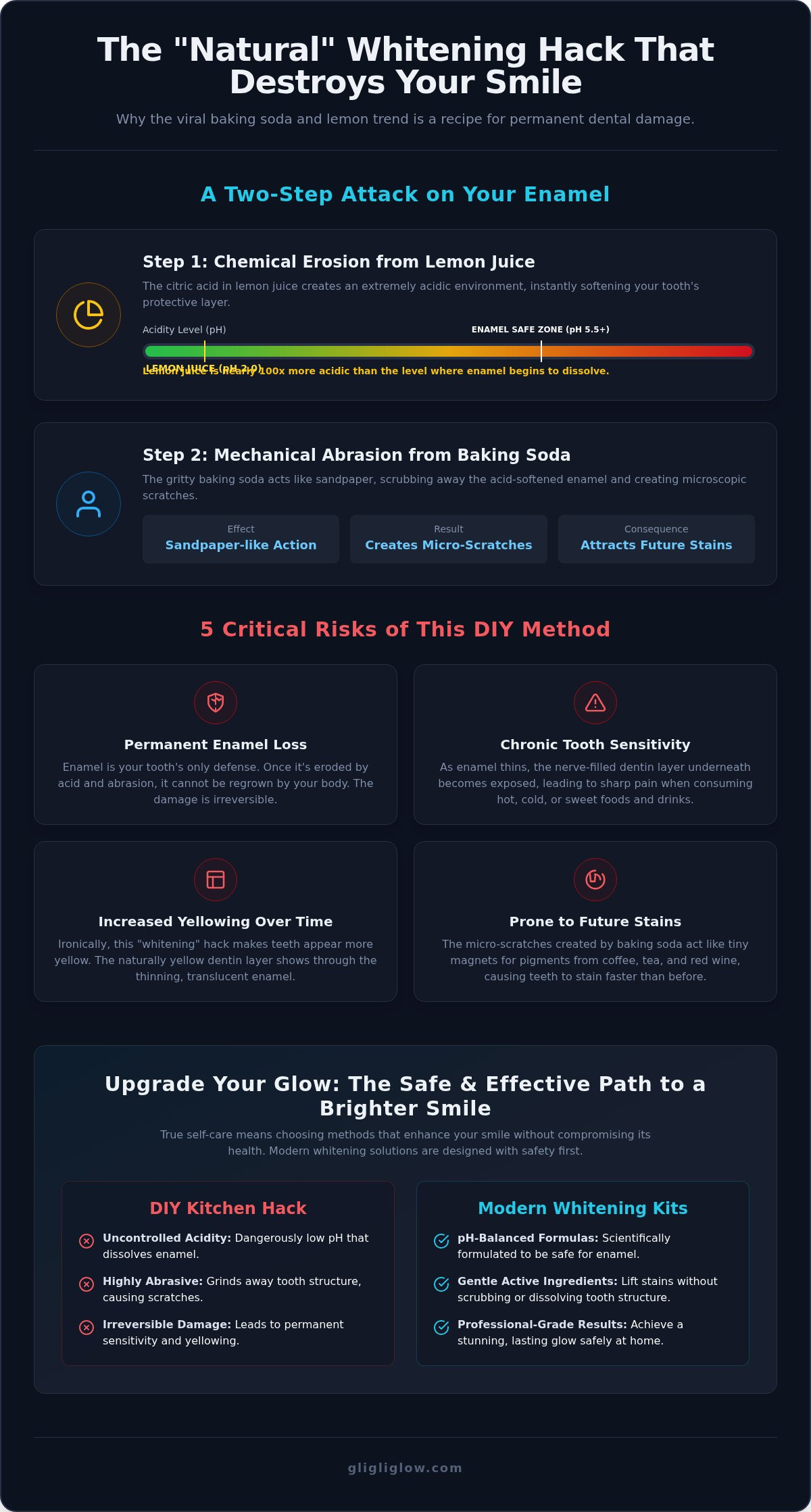
Mixing these two common ingredients creates a "double whammy" effect that your teeth just aren't built to handle. Think of it as a tag-team attack on your smile. First, the lemon juice acts as a chemical solvent, softening the outer layer of your teeth. Then, the baking soda comes in as a mechanical abrasive to scrub that softened surface away. While you might see a quick flash of white, you're actually seeing the raw, underlying layers of your teeth being exposed. Understanding the baking soda and lemon for teeth whitening risks starts with a quick lesson in pH levels. Your tooth enamel begins to demineralize at a pH of 5.5. Lemon juice has a staggering pH of approximately 2.0, which is nearly 100 times more acidic than the safety threshold for your smile!
Acidic Erosion: Melting Your Smile Away
Citric acid is a powerful agent that leaches calcium directly from your teeth. This process, known as demineralization, literally melts the mineral structure that protects your nerves. Unlike professional whitening gels that use carefully balanced pH formulas to keep your mouth in a safe zone, raw lemon juice is uncontrolled and aggressive. It's a dangerous game to play because enamel is a non-renewable resource. Once the acid dissolves it, your body cannot grow it back. Overusing this hack can quickly damage your tooth enamel, leaving you with permanent damage that no amount of brushing can fix.
Abrasive Scrubbing: The Sandpaper Effect
Baking soda has a high Relative Dentin Abrasivity (RDA) when used in its raw, crystalline form. Scrubbing your teeth with this paste creates microscopic scratches called micro-fissures. These tiny grooves act like magnets for pigments from your morning coffee or evening glass of wine. Instead of staying white, your teeth become more porous and susceptible to deep staining. This is why we always recommend using a soft bristle toothbrush and gentle, lab-tested ingredients instead of harsh DIY pastes. If you're looking for a way to glow without the grit, the GLI GLI whitening experience offers a tech-backed alternative that respects your enamel while delivering that brilliant shine you crave. ✨
5 Critical Risks of DIY Baking Soda and Lemon Whitening
While the idea of a "free" whitening hack sounds amazing, the reality is that the baking soda and lemon for teeth whitening risks can lead to expensive dental bills later. It’s not just about a little temporary discomfort. You’re actually performing a harsh chemical experiment on your own smile. Before you try this at home, you need to know exactly what’s happening to your teeth and gums. 🛑
Here are the five most serious dangers of this DIY method:
- Permanent Enamel Thinning: As you scrub away at your teeth, you’re losing the protective white shield that keeps your smile bright.
- Chronic Tooth Sensitivity: When your enamel thins, the microscopic pathways to your nerves are exposed, making a simple glass of cold water feel like an electric shock.
- Gum Recession: The high acidity of lemon juice can irritate and even burn your soft gum tissue, causing it to pull away from your teeth.
- Increased Cavity Risk: Thinner enamel means your teeth have less defense against the bacteria that cause decay and painful cavities.
- Rebound Staining: Because the baking soda creates a rough, scratched surface, your teeth will actually absorb stains from coffee and food much faster than before.
Understanding these baking soda and lemon for teeth whitening risks is the first step toward a truly healthy glow. You deserve a routine that builds your confidence without compromising your health! ✨
The "Yellowing" Paradox
Did you know that the part of your tooth that’s actually white is just the outer shell? That’s your enamel. Directly underneath it lies the dentin, which is naturally yellow. When you use abrasive DIY hacks, you’re literally scrubbing away the white layer to reveal the yellow core underneath. It’s a total paradox! Your teeth might look "cleaner" for a day, but they’ll end up looking permanently more yellow as the enamel disappears. This is why the American Dental Association recommends looking for safe and effective whitening treatments that lift stains from the enamel rather than removing the enamel itself. 💎
Gum Health and Soft Tissue Irritation
If you’ve ever felt a stinging sensation while trying a DIY hack, that’s your body’s way of saying "stop!" ✋ That sting isn’t the feeling of the treatment "working." It’s actually a sign of a chemical burn. Your gums are incredibly delicate, and the citric acid in lemon juice is far too harsh for them. Over time, this irritation can lead to root exposure, which is both painful and aesthetically frustrating. Modern technology has come so far to solve this! For example, the GLI GLI LED Whitening Device is specifically designed to target your teeth while staying away from your gum line. It’s all about getting that professional-grade sparkle while keeping your soft tissues happy and healthy. 💖
Safe and Effective Alternatives for a 2026 Glow-Up
Now that you know the baking soda and lemon for teeth whitening risks, don't let that dim your sparkle! 🌟 You can absolutely have a dazzling, high-vibe smile without the dental drama. The secret lies in choosing products that work with your biology, not against it. Modern oral care has come such a long way, and you can now achieve professional results from your own bathroom using ingredients that actually strengthen your teeth while they brighten. It's time to trade that kitchen-counter chemistry for a routine that feels like a pampering ritual. ✨
Instead of raw acid, look for Phthalimidoperoxycaproic acid (PAP). It's a total game-changer for anyone who wants a white smile without the "zing" of sensitivity! PAP works by oxidizing stains without thinning your enamel. When you pair this with remineralizing stars like hydroxyapatite, you're actually helping to "fill in" the microscopic pores of your teeth. This makes your smile look smoother and more radiant. Why use lemon juice to "boost" a reaction when you can use LED technology? Blue light devices are the modern, tech-backed way to accelerate results safely, keeping your mouth far away from the acidic danger zone. 💎
Look for Non-Abrasive Formulations
The biggest difference between a lab-tested product and a DIY hack is how they handle stains. While DIY pastes grind away your tooth structure, the best at-home whitening kits use gels that dissolve stains chemically. This keeps your enamel intact and your smile healthy! If you're always on the go, using a teeth whitening pen is a brilliant way to handle targeted touch-ups without any grit. Always check for "enamel-safe" labels to ensure your daily routine is pure self-love. 💖
The Power of Peroxide-Free Glow
If you're looking for a gentle approach, you'll love natural whitening strips that use lab-tested botanical extracts. Unlike the baking soda and lemon for teeth whitening risks that involve harsh erosion, these strips use oxygen-based whitening to gently lift pigments. It’s the true "natural" alternative that actually protects your long-term dental health. Ready to ditch the risky hacks and embrace a professional shine? You can explore the full GLI GLI collection to find the perfect, safe match for your unique smile! 🌈
Upgrade Your Routine with the GLI GLI Teeth Whitening Kit
It’s time to stop gambling with your enamel and start investing in yourself! 💖 You’ve seen how the baking soda and lemon for teeth whitening risks can lead to permanent damage, but you don't have to settle for a duller smile. The GLI GLI Teeth Whitening Kit is here to give you that stunning, high-wattage glow without the fear. We believe that your daily routine should be a kényeztető ritual that makes you feel amazing, not a risky science experiment that leaves you in pain. Why settle for a kitchen hack when you can have professional results at home? ✨
Our kit is designed with your safety as the top priority. While the DIY mixture of acid and grit attacks your tooth structure, GLI GLI uses dental-grade ingredients that are both FDA and ISO-approved. Developed by dental experts, our formula focuses on lifting deep stains while keeping your sensitivity in check. It’s all about that pain-free glow! Plus, we include a comprehensive result guarantee. That’s the kind of peace of mind you’ll never get from a lemon. Treating your smile is an act of self-love, and you deserve the best technology available to protect your confidence. 💎
Why GLI GLI is Your Smile’s New Bestie
The GLI GLI experience is all about the ultimate "Glow-Up" that fits perfectly into your pörgős mindennapok. Our LED whitening device is a modern, tech-backed way to boost your results without using high acidity. It’s fast, easy, and incredibly effective! We don't just stop at one treatment, either. Our kit includes the booster gels you need for maintenance, ensuring your results stay fresh and vibrant. Whether you're getting ready for a big event or just want to feel more confident in your daily selfies, this routine fits right into your modern wellness and beauty world. It’s fresh, it’s sleek, and it actually works! 🌈
Ready for a Brighter, Safer Smile?
Let’s be real: that baking soda and lemon hack belongs in the trash, not on your beautiful teeth. The baking soda and lemon for teeth whitening risks are simply too high for a temporary result. Your dental health is too precious to risk on a viral trend that could cause lifelong sensitivity. Choose expert-backed care that respects your biology and enhances your natural beauty. You’ve got one set of teeth, so let’s treat them with the love they deserve! Your smile is your most important accessory: protect its enamel with the GLI GLI Teeth Whitening Kit. Ready to start your journey to a safer, more radiant glow? Let’s do this! 💫
Ready to Ditch the DIY and Shine with Confidence?
Your smile is your most radiant accessory, and it deserves to be treated with pure love! 💖 We’ve uncovered why those kitchen-counter hacks are actually a recipe for permanent trouble. Remember, once your enamel is gone, your body can't grow it back. Understanding the baking soda and lemon for teeth whitening risks is the ultimate act of self-care. It means you’re choosing long-term health over a dangerous, temporary fix that leads to sensitivity and yellowing. You don't have to sacrifice your safety for a Hollywood glow! ✨
Why settle for risky chemistry when you can have expert-backed results? Our kit features FDA and ISO approved ingredients and was developed by dental experts to ensure your busy lifestyle stays bright and pain-free. With our 100% result guarantee, you can finally enjoy a pampering ritual that actually works. It's time to upgrade your routine and protect your beautiful enamel for good!
Get the safe, professional glow you deserve with the GLI GLI Teeth Whitening Kit!
You are worthy of a smile that makes you feel unstoppable. Let's make that glow happen the right way! 🌈
Frequently Asked Questions
Can I use baking soda and lemon once a month without damage?
Even a single use can trigger permanent changes to your tooth structure. Because lemon juice is highly acidic, it immediately begins to soften your enamel. When you combine this with abrasive baking soda, you're essentially scrubbing away that softened layer. It’s a risky gamble that isn't worth the damage. Instead of monthly DIY sessions, choose a professional-grade kit that protects your smile while delivering a stunning, safe glow.
How long does it take for lemon juice to damage tooth enamel?
Damage begins the moment the acid touches your teeth. Scientific research shows that enamel demineralization starts when the pH in your mouth drops below 5.5. Since lemon juice has a pH of approximately 2.0, it creates an instant danger zone. Within seconds, the citric acid starts leaching calcium from your enamel. This makes the baking soda and lemon for teeth whitening risks very real from the very first application.
Is baking soda alone safe for teeth whitening?
While baking soda is less acidic than lemon, it’s still a mechanical abrasive. It works by physically scrubbing away surface stains, but it can also create microscopic scratches on your enamel. Over time, these tiny fissures actually trap more pigments from coffee or wine, making your teeth look duller. It’s much safer to use a gel-based formula that dissolves stains chemically without the grit of household powders.
What should I do if I already used baking soda and lemon on my teeth?
First, stop using the mixture immediately to prevent further erosion! You should switch to a remineralizing toothpaste containing hydroxyapatite or fluoride to help strengthen your remaining enamel. Avoid brushing your teeth for at least thirty minutes after consuming acidic foods or drinks. If you’re experiencing sharp pain or extreme sensitivity, it’s a good idea to chat with your dentist to check for any permanent thinning or root exposure.
Are there any natural ways to whiten teeth that actually work?
The best "natural" approach is preventing stains before they happen! Drinking water after coffee and eating crunchy veggies can help. However, if you want visible results, look for peroxide-free alternatives like PAP (Phthalimidoperoxycaproic acid). This lab-tested ingredient offers a safe way to oxidize stains without the harshness of DIY hacks. It’s the modern, conscious way to get a radiant smile while keeping your delicate enamel perfectly intact.
Why do my teeth feel sensitive after using a DIY whitening hack?
That "zing" you feel is a major red flag! Sensitivity happens because the acidic lemon juice has thinned your enamel, exposing the microscopic tubules that lead directly to your dental nerves. When these nerves are exposed to hot or cold temperatures, they react with pain. This is one of the most common baking soda and lemon for teeth whitening risks. It’s your body’s way of telling you that your protective shield is compromised.
Can enamel grow back if I stop using acidic DIY treatments?
Unfortunately, enamel is a non-renewable resource. Unlike your skin or hair, your body cannot grow new enamel once it has been dissolved or scrubbed away. While you can "remineralize" or harden existing enamel with the right products, you can't replace what’s already lost. This is why it’s so important to avoid harsh DIY treatments and choose expert-backed care that preserves your natural tooth structure from the start.
Is it better to use a whitening kit or whitening toothpaste?
It depends on your goals! Whitening toothpaste is great for removing surface stains from your daily coffee, but it won't change your actual tooth shade. For a real transformation, a whitening kit is the way to go. Kits use active ingredients and LED technology to reach deeper stains safely. At GLI GLI, we recommend using a kit for your initial glow-up and a whitening pen for easy, on-the-go maintenance.


