


What if those pesky yellow tones on your teeth aren't a sign of "bad" hygiene at all? ✨ It's totally normal to feel a bit shy about your smile when the mirror doesn't reflect the brightness you want. You might even worry that the staining is permanent or a sign of poor health. If you're frustrated because you brush every day but still wonder what causes teeth to turn yellow, you're definitely not alone! In fact, research shows that 32% of people in the UK alone wish for a whiter smile.
We believe your daily routine should feel like a pampering ritual that boosts your confidence. 💖 You deserve to feel radiant in every photo without the confusion of conflicting advice. This article helps you understand the biological and lifestyle factors behind discoloration so you can stop the staining at the source. We'll explore seven surprising reasons for yellowing and reveal how to safely restore your brilliant white glow at home. Get ready to fall in love with your smile all over again! 🌟
Key Takeaways
- Understand the science of your smile by distinguishing between surface-level staining and the natural yellowing of the dentin beneath your enamel. ✨
- Uncover exactly what causes teeth to turn yellow by identifying the "Big Three" drinks and the specific tannins that love to cling to your pearly whites. ☕
- Learn how internal factors, like childhood fluoride levels or certain antibiotics, can affect your tooth color from deep within the tooth structure.
- Adopt easy, pro-active habits like the "Rinse After You Sip" rule to keep your smile bright without giving up your favorite daily treats. 🍷
- Discover why modern LED-assisted whitening is the ultimate ritual for safely restoring a radiant, professional-looking glow from the comfort of home. 🌟
The Science of the Smile: Why Teeth Change Colour
Ever wonder why your teeth don't always stay that crisp, paper-white shade? 🦷 It's not just about how often you brush. To really understand what causes teeth to turn yellow, we need to peek behind the curtain of your tooth's anatomy. Your smile is made of layers, and each one plays a role in your overall glow. It's a delicate balance between your unique biology and the world around you!
First, let's talk about the pellicle. This is a super thin protein film that forms on your teeth just minutes after you finish cleaning them. While it actually helps protect your enamel, it also acts like a sticky magnet for pigments. For a comprehensive overview of tooth discoloration, scientists often look at how this film interacts with different substances. Some people are also just born with "creamier" teeth. Genetics determine the thickness of your enamel and the natural shade of the layer underneath. It's not a hygiene fail; it's just your DNA! ✨
Enamel vs. Dentin: The Transparency Trap
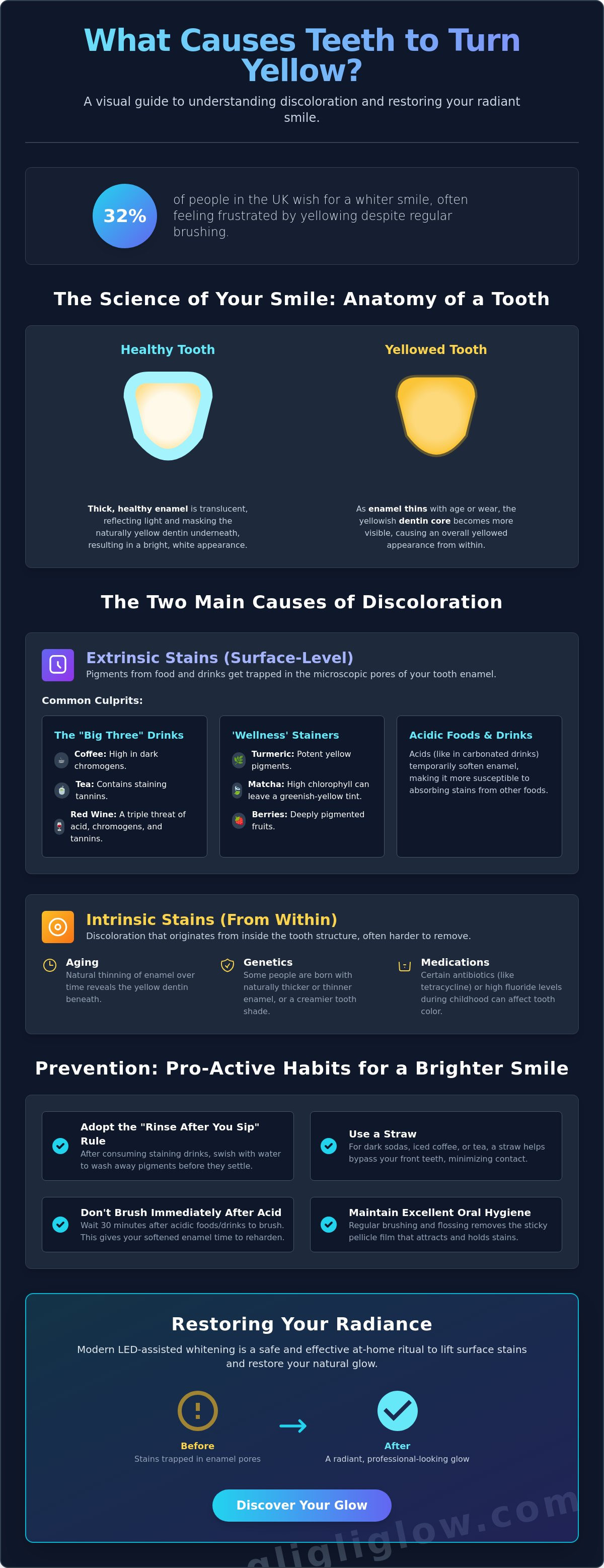
Your teeth have two main players: the enamel and the dentin. Enamel is the hard, protective outer shield. It's actually translucent, which means light passes through it. Underneath that shield sits the dentin, a dense tissue that is naturally yellowish. When your enamel is thick and healthy, it reflects light and looks bright. However, as we age or experience wear, that enamel layer starts to wear down. Think of your enamel as a window; when it thins, you see more of the yellow room inside.
This thinning is a major reason why what causes teeth to turn yellow can feel like a losing battle as time goes on. This is known as intrinsic change because it's happening from within the tooth structure. When the "inner core" becomes more visible, your smile takes on a deeper, warmer hue that no amount of regular toothpaste can reach. 💖
Extrinsic Stains: The Surface Level
Extrinsic stains are the ones we usually notice after a morning latte or a glass of evening red. Your enamel might look perfectly smooth, but it's actually covered in microscopic pores. These tiny "craters" love to trap dark pigments from food and drinks. If you love acidic snacks, be careful! Acidic environments can temporarily soften your enamel, making those pores even more "thirsty" for stains. 🍷
The good news is that these surface-level marks are the easiest to transform. Because they live on the outer layer, you can target them effectively with the right tools. Using a high-quality at-home teeth whitening kit is like giving your smile a professional-grade detox. It lifts those trapped pigments out of the pores, allowing your natural radiance to shine through once again. It's a simple, effective way to turn your daily routine into a self-love ritual! 🌟
Lifestyle Culprits: The Most Common External Causes
Your morning latte might be your favorite wake-up ritual, but it's also a top contender for stealing your glow. If you've been searching for what causes teeth to turn yellow, your kitchen pantry might actually hold the answers! While your enamel is a tough shield, it's constantly battling "The Big Three": coffee, tea, and red wine. These drinks are packed with chromogens, which are highly pigmented molecules that love to cling to your tooth enamel. ☕
Tea and red wine also contain tannins. These are bitter-tasting plant compounds that make it even easier for those dark pigments to stick to your teeth. Red wine is a triple threat because it's acidic, which temporarily softens your enamel, allowing chromogens and tannins to sink even deeper. While many lifestyle factors are at play, there are also medical causes of tooth discoloration that can overlap with our daily choices. Even your favorite fizzy water can play a role! The acid in carbonated drinks creates a "micro-etching" effect on your enamel, essentially prepping your teeth to absorb stains from whatever you eat next. 🍷
The 'Wellness' Stainers: Turmeric, Matcha, and Berries
We all love a good wellness trend, but some "superfoods" are surprisingly heavy hitters for staining. Turmeric is famous for its bright yellow hue, and unfortunately, it loves to share that color with your smile! If you're a fan of golden milk or turmeric lattes, those pigments can build up over time. Matcha is another one to watch. While it's a great alternative to coffee, its high chlorophyll content can leave a dull, greenish-yellow tint. 🍵
Don't worry, you don't have to give up your healthy habits! A quick tip is to rinse your mouth with water immediately after enjoying these high-pigment treats. For those busy days when you're on the move, keeping a GLI GLI Teeth Whitening Pen in your bag is a total game-changer for quick touch-ups after your matcha fix. ✨
Vaping and Tobacco: Beyond the Smoke
It's a common myth that vaping is "safer" for your smile just because there's no smoke. In reality, nicotine is a major factor in what causes teeth to turn yellow. Nicotine itself is colorless, but as soon as it's exposed to oxygen, it turns into a stubborn yellowish substance. This sticky residue gets trapped inside the microscopic pores of your enamel that we talked about earlier. 💨
Vaping and traditional tobacco both deposit this residue directly onto your teeth. Because nicotine is so sticky, it acts like a glue for other food particles and stains, leading to a much faster buildup of discoloration. Plus, it can reduce blood flow to your gums, making it harder for your mouth to stay healthy and vibrant. Choosing a smoke-free and vape-free lifestyle is one of the best ways to protect your long-term radiance and keep your smile looking fresh and youthful! 🌟
Deep-Rooted Causes: When Yellowing Comes From Within
While we often blame our morning coffee, sometimes the answer to what causes teeth to turn yellow lies much deeper than the surface. Intrinsic staining happens inside the tooth, often during its development or due to factors beyond our daily control. It’s important to remember that these changes aren’t a reflection of your cleaning habits! They are simply a part of your unique biological journey. 🌿
For instance, certain medications like tetracycline can affect tooth development in children, leading to a permanent greyish-yellow tint that traditional brushing can't touch. Similarly, excessive fluoride intake during childhood, known as fluorosis, can create white spots or a yellowish cast on the enamel. While we usually focus on avoidable causes of tooth discoloration like diet and smoking, these developmental factors are deep-rooted. Even dental trauma plays a role. If you ever bumped a tooth as a child, it might have "bruised" internally. This causes the dentin to darken as a protective response, making the tooth look yellow or even grey from the inside out.
Ageing and the Natural Evolution of Your Smile
Your smile evolves just like you do. Over the decades, even the strongest enamel naturally thins from everyday use. This makes the yellowish dentin underneath more visible, a process we explored earlier in our look at tooth anatomy. By 2026, we’ve learned that a "glow-up" routine should be tailored to your stage of life. Older teeth also accumulate "micro-cracks" over time. These tiny, invisible lines don't just catch stains; they change how light reflects off your teeth, often resulting in a duller look. It's a natural part of a life well-lived, but that doesn't mean you can't refresh your radiance! ✨
The Genetics Factor: Are You 'Born' With Yellow Teeth?
Did you know that your DNA is the ultimate architect of your smile? Your genetics determine the density and thickness of your enamel. Some of us are simply born with a "creamier" base shade, often referred to as A3 in dental circles. This is a perfectly healthy, normal tooth shade! If your yellowing is genetic, you might find that aggressive treatments feel a bit too intense for your needs. 💖
In these cases, choosing natural whitening strips can be a wonderful, gentle way to brighten your smile. It's all about finding a ritual that honors your unique biology while giving you that boost of confidence you deserve. Understanding what causes teeth to turn yellow for you specifically is the first step toward a smile that feels authentic and bright. You don't need a "perfect" Hollywood white to have a stunning, radiant glow that lights up the room! 🌟
Prevention and Daily Habits for a Brighter Smile
Now that you’ve mastered the "why," let’s dive into the "how!" Keeping your smile radiant doesn't mean you have to give up your morning latte or your favorite evening treats. It’s all about creating a kényeztető ritual that protects your glow while you enjoy life. Prevention is the ultimate act of self-love for your smile. By making a few small tweaks to your daily flow, you can stay ahead of what causes teeth to turn yellow and keep that confidence high! ✨
One of the easiest hacks is the "Rinse After You Sip" rule. After finishing a coffee or a glass of red wine, simply swish some plain water around your mouth. This helps wash away those pesky chromogens and tannins before they have a chance to settle into your enamel pores. If you really want to level up, try using a straw for high-pigment drinks. It might feel a bit playful, but it effectively bypasses your front teeth, saving them from direct contact with staining liquids. 🥤
Your body actually has its own built-in defense system: saliva! Saliva is a total superhero for oral health. It works around the clock to neutralize acids and deliver essential minerals back into your enamel. This process, called remineralization, keeps your "protective shield" strong and translucent. To keep the saliva flowing, make sure you're staying hydrated throughout the pörgős mindennapok. A dry mouth is a magnet for stains, so keep that water bottle close! 💧
The Glow-Up Routine: Brushing and Flossing 2.0
Did you know that brushing immediately after eating can actually do more harm than good? If you’ve just had something acidic, your enamel is temporarily softened. Brushing right away can scrub that softened layer off, which leads to the thinning enamel we mentioned earlier. Wait at least 30 minutes to let your saliva do its job first! Consistency is key because plaque is a sticky, yellowish film that catches external stains like a magnet. For your daily maintenance, check out our ultimate opalescence toothpaste guide to find the perfect match for your 2026 routine. 💖
Hydration and Diet: Eating for White Teeth
You can actually snack your way to a brighter smile! Crunchy, high-fiber fruits and veggies like apples, carrots, and celery act as "natural toothbrushes." As you chew, they gently scrub away surface debris and stimulate saliva production. Dairy is another glow-up essential. Cheese and yogurt are packed with calcium and phosphates that help strengthen your enamel from the outside in. Plus, cheese helps raise the pH level in your mouth, making it less hospitable to the acids that contribute to what causes teeth to turn yellow. Ready to take your radiance to the next level? Grab your own GLI GLI Teeth Whitening Kit and start your journey to a more confident, vibrant you today! 🌟
Restoring Your Radiance: The Path to a Whiter Glow
Ready to turn the page on dullness and reclaim your most vibrant self? ✨ Understanding what causes teeth to turn yellow is the first step, but now it's time for the fun part: the transformation! While regular brushing handles surface debris, deep oxygen whitening is the secret to reaching those internal stains we discussed earlier. It’s the difference between a quick polish and a total kényeztető ritual that refreshes your smile from the inside out. Surface polishing often relies on abrasives that can wear down your enamel if you aren't careful. In contrast, oxygen-based whitening safely penetrates the pores to lift pigments without scratching your protective shield.
LED-assisted whitening has become the modern gold standard for a reason. The light works with the whitening gel to break down stubborn pigment molecules faster than gel alone. It’s efficient, effective, and fits perfectly into your pörgős mindennapok. Best of all, you can achieve professional-level results while catching up on your favorite show or relaxing on the sofa. This technology ensures that the active ingredients stay active exactly where they need to be, giving you a more even and brilliant result. It's about working smarter, not harder, for that luminous look! 💖
Why GLI GLI is Your Smile's Best Friend
We believe whitening should feel like self-care, not a chore. The GLI GLI Teeth Whitening Kit was designed with your comfort in mind. By using the GLI GLI LED Whitening Device, you’re using the same technology that makes professional treatments so effective, but in a way that’s gentle on your enamel. It’s about getting that high-end glow without the clinical atmosphere or the "zings" often associated with older methods. Our kit gives you the freedom to brighten your smile on your own terms, making it a seamless part of your wellness journey. You don't have to choose between a bright smile and a comfortable experience anymore! 🌟
Tailoring Your Routine for Sensitive Teeth
If you have naturally delicate teeth, you might have avoided whitening in the past. Don't worry! You can still achieve a stunning result by choosing products specifically formulated for you. Learning how to use sensitive whitening strips effectively is a game-changer. These strips provide a gentler concentration of active ingredients while still lifting those deep-rooted stains that contribute to what causes teeth to turn yellow. It's the perfect way to dip your toes into the world of whitening without any fear of discomfort.
To keep your glow going long-term, consistency is your best friend. Using GLI GLI Teeth Whitening Gel Refills allows you to maintain your results without starting from scratch. Think of it as a little monthly refresh for your confidence! For those busy days when you need a quick boost, the GLI GLI Teeth Whitening Pen is perfect for keeping your smile on point. Ready to meet your brightest smile yet? Shop the GLI GLI Collection and discover the power of a truly radiant glow! 🌈
Embrace Your Most Radiant Smile Today!
You’ve unlocked the secrets to a brighter, more confident you! From understanding how your unique biology interacts with "The Big Three" to mastering the "Rinse After You Sip" rule, you now have a clear picture of what causes teeth to turn yellow. Remember, your smile is an evolving part of your beauty journey. Whether the causes are lifestyle-based or deep-rooted, you don't have to settle for a duller look. You deserve a routine that feels like a kényeztető ritual and delivers real, glowing results. ✨
Why wait for a special occasion to feel your best? Our dental-grade formula was developed by experts using FDA and ISO approved ingredients to ensure your safety and comfort. We believe in your transformation so much that we offer a comprehensive result guarantee. It’s time to treat yourself to the professional-level care you deserve from the comfort of your own home. 💖
Get Your Glow Back with the GLI GLI Teeth Whitening Kit ✨
Your journey to a more vibrant, aesthetic-oriented lifestyle starts with a single, radiant smile. We can't wait to see you shine! 🌟
Frequently Asked Questions
Can yellow teeth become white again?
Yes, most yellowing can be reversed with the right approach! Surface stains from coffee or food are the easiest to lift, while deeper internal yellowing requires oxygen-based whitening to reach the inner layers of the tooth. Using a high-quality home kit can safely restore your radiant glow without the need for harsh, abrasive treatments that might damage your enamel. ✨
Is it normal for teeth to be slightly yellow?
It is completely normal and healthy for teeth to have a slight yellowish tint. Since your enamel is naturally translucent, the yellowish dentin underneath often shows through, especially as we age. Genetics also play a huge role in your "base" shade. A healthy smile doesn't have to be paper-white to be stunning and vibrant! 💖
How can I whiten my teeth naturally at home?
You can support a brighter smile naturally by snacking on crunchy fruits and veggies like apples, celery, and carrots. These act as "natural toothbrushes" to scrub away surface debris and stimulate saliva flow. Staying hydrated is another simple ritual that prevents stains from sticking. Avoid "DIY" hacks like lemon juice or baking soda, as these can actually erode your protective enamel shield over time. 🍎
Does coffee always stain your teeth?
Coffee is a major factor in what causes teeth to turn yellow, but it doesn't have to ruin your smile. The pigments in coffee, called chromogens, love to cling to your enamel. However, you can minimize the impact by rinsing your mouth with water after your cup or using a straw to bypass your front teeth. These small habits make a huge difference in maintaining your brightness! ☕
Can brushing too hard make teeth look more yellow?
Surprisingly, yes! If you brush too aggressively, you can actually wear down your translucent enamel layer. As this protective shield thins, the yellowish dentin underneath becomes much more visible, making your teeth appear darker. It is always better to use a soft-bristled brush and gentle, circular motions to keep your enamel thick and your smile looking bright. 🪥
Are yellow teeth a sign of poor health?
Not at all! In most cases, yellowing is simply a result of lifestyle choices, genetics, or the natural aging process. While certain medical conditions can affect tooth color, a yellowish tint usually doesn't mean your teeth are unhealthy. Focus on your daily hygiene and enjoy the confidence that comes with a well-cared-for, radiant smile! 🌟
How long does it take to see results from whitening?
You can often see a noticeable difference in as little as three to five days with consistent use. Using an LED-assisted kit can speed up the process by helping the whitening gel penetrate deeper and faster. Everyone's teeth are unique, but most people achieve their desired "glow-up" within a full ten to fourteen day cycle. Consistency is the secret to your brightest results! ✨
Why is only one of my teeth turning yellow?
If only one tooth is changing color, it is often due to past trauma or an internal "bruise." When a tooth is injured, the inner dentin can darken as a way to protect the nerve, which is a specific example of what causes teeth to turn yellow from the inside out. It is a good idea to mention this during your next dental checkup to ensure the tooth remains healthy and strong! 🦷


