


Did you know that up to 60% of people using professional treatments experience that sharp, sudden "zing" of tooth sensitivity? It's the ultimate beauty dilemma. You're dreaming of a radiant, Hollywood smile, but the fear of opalescence teeth whitening side effects keeps you from starting your journey. Whether it's a nagging worry about permanent enamel damage or confusion over which gel concentration is right for you, that whitening anxiety is totally real! ✨
I completely get it. Your smile is your best accessory, and you shouldn't have to choose between a brilliant glow and basic comfort. Whitening should feel like a pampering ritual, not a test of your pain tolerance. I'm going to show you exactly how to achieve a flawless finish without the "ouch," so you can finally approach your glow-up with total confidence. 💖
In this guide, you'll discover how to manage sensitivity like a pro, which concentrations actually work for your unique teeth, and how modern tech makes the whole process way more comfortable. Get ready to master your whitening routine and finally get that pain-free, pearly white smile you deserve! 🦷✨
Key Takeaways
- Learn why Carbamide Peroxide causes temporary "zingers" and how oxygen molecules interact with your enamel for that deep-stain removal. 🦷
- Master the best ways to minimize opalescence teeth whitening side effects by prepping your enamel and using the "less is more" gel rule. ✨
- Find your perfect comfort zone by comparing different peroxide concentrations to balance speed with sensitivity. ⚖️
- Discover how to protect your gums from irritation with proper tray loading and dosage techniques for a flawless ritual. 💖
- Explore how the GLI GLI LED Whitening Device uses modern tech to achieve a brilliant glow with less chemical intensity. 🌟
Understanding Opalescence: Why Side Effects Happen 🦷
Ever wondered what's actually happening inside your teeth when you apply that whitening gel? It feels like magic, but it's pure chemistry! Opalescence relies on Carbamide Peroxide to do the heavy lifting. When this active ingredient hits your teeth, it breaks down into oxygen molecules. These tiny powerhouses dive deep into your enamel and dentin, shattering the chemical bonds of those stubborn coffee and wine stains. It's a deep-clean for your smile, but this intense process is exactly why opalescence teeth whitening side effects occur. ✨
While the results are stunning, the journey can feel a bit bumpy. According to dental data, approximately 40-60% of users experience temporary tooth sensitivity. This usually happens because the peroxide travels through the microscopic pores in your enamel to reach the dentin. If you're using high concentrations, like the 35% or 45% gels, those oxygen molecules move much faster. This speed increases the risk of "zingers," those sharp, sudden flashes of discomfort that make you jump! It's vital to remember that while these sensations are annoying, they don't mean you're melting your teeth. There is a huge difference between temporary sensitivity and actual, permanent enamel damage.
The Science of Tooth Dehydration
Did you know your teeth can get thirsty? It's true! One of the most common causes of discomfort is tooth dehydration. Whitening gels have an osmotic effect, which means they temporarily draw moisture out of your tooth structure. When the water level inside your tooth drops, the tiny nerve endings in the pulp become more exposed to temperature changes and air. This is why a sip of cold water feels like a lightning bolt during your treatment! The good news? This dehydration is totally temporary. Your saliva naturally rehydrates your teeth within 24 to 72 hours, which is why common side effects of teeth whitening usually fade away quickly once you stop the treatment. 💧
Enamel Safety vs. Chemical Intensity
We all want that instant Hollywood glow, but "stronger" isn't always "better" for your wellness ritual. Professional whitening gels are formulated with specific pH levels to keep your enamel safe, yet high chemical intensity can still be taxing. When exploring opalescence teeth whitening side effects, you'll find that lower concentrations (like 10% or 15%) take longer to show results but are much gentler on your nerves. ⚖️
- Dental-grade formulas: Always look for ISO-approved ingredients to ensure the gel isn't too acidic.
- Concentration matters: Jumping straight to 35% Carbamide Peroxide might be too much if your teeth are already sensitive.
- Ritual over rush: A slower whitening process often leads to a more comfortable experience and a more sustainable shine.
Choosing a balanced approach ensures you get that pearly white finish without compromising your comfort. After all, your smile should make you feel confident, not cautious! 💖
The 'Big Three' Side Effects You Need to Know 💖
Let's get real about your glow-up. While we all love that fresh, pearly look, your ritual shouldn't feel like a chore. Understanding the "Big Three" side effects is your secret weapon to a stress-free experience. When we talk about opalescence teeth whitening side effects, we're usually looking at sensitivity, gum drama, and those mysterious white spots that can pop up out of nowhere.
Gum irritation is often the first thing people notice. If the whitening gel overflows from your tray and touches your soft tissue, it can cause "soft tissue blanching." This is just a fancy way of saying your gums have turned temporarily white. It might look a bit startling, but it's actually a mild reaction to the peroxide that usually vanishes within a few hours. To avoid this, keep your gel dosage precise and wipe away any excess immediately. Your gums should stay pink and healthy throughout your journey!
Managing Tooth Sensitivity and 'Zingers'
The infamous "zinger" is that sharp, electric flash of pain that happens when the peroxide reaches your tooth's nerve. Why do some teeth react more than others? Often, it's because of thinner enamel or slightly receding gum lines that expose the more sensitive parts of your tooth. Extensive research on whitening risks shows that the intensity of these symptoms is directly linked to how long the peroxide stays in contact with your tissues and the concentration of the gel. Typical sensitivity is temporary and generally subsides within 1 to 3 days. If the pain feels constant or prevents you from sleeping, it's a clear sign your teeth need a little "self-care break" from the chemicals.
White Spots: The Dehydration Myth
Seeing chalky white patches after a session? Don't panic! This isn't permanent damage. These spots are usually caused by hypocalcification, which are existing mineral imbalances in your enamel that were already there. The whitening process dehydrates the tooth, making these spots stand out more against the rest of your smile. As your teeth rehydrate naturally through your saliva, these patches will blend back in and disappear. It's all part of the process! You can help this along by drinking plenty of water and avoiding staining foods immediately after your session.
If you want a brilliant smile without the constant worry of "zingers" or uneven patches, a sensitivity-focused solution like the GLI GLI Teeth Whitening Kit is a fantastic way to upgrade your routine. It's all about achieving that radiant glow with total peace of mind. 🌟
Peroxide Concentration: Finding Your Comfort Zone ⚖️
Choosing your whitening strength is a lot like picking a skincare active. You wouldn't start with a high-strength peel on sensitive skin, and the same logic applies to your smile! Opalescence offers several concentrations of Carbamide Peroxide, typically 10%, 15%, 20%, and 35%. While it's tempting to grab the highest percentage for the fastest results, this is where most people run into trouble. The higher the concentration, the more intense the opalescence teeth whitening side effects can become, especially those sharp "zingers" we discussed earlier. ✨
The 35% formula is a powerhouse designed for "minimally-sensitive" teeth and short wear times. It works fast, often in just 30 to 60 minutes, but it's much more likely to trigger a reaction. If you're new to the ritual or have a history of feeling a chill when you eat ice cream, starting with a lower strength is the smartest move for your peace of mind. According to the American Dental Association, common side effects of teeth whitening are almost always related to the intensity of the peroxide and how long it stays on your teeth. ⚖️
The 10% vs. 35% Debate
Is faster always better? Not necessarily! Lower concentrations like the 10% gel often yield the exact same brilliant results as the 35% version. The only difference is the time it takes to get there. A 10% gel is designed for extended wear, often 8 to 10 hours or even overnight. This slower, gentler approach allows your teeth to adjust, significantly reducing the risk of pain. If you've struggled with sensitivity in the past, expert advice always points toward the "slow and steady" method. It's a marathon for your glow-up, not a sprint! 🏃♀️
Custom Trays vs. Prefilled Options
How you apply the gel is just as important as the strength you choose. Prefilled trays, like the Opalescence Go system, are incredibly convenient for a busy lifestyle, but they aren't one-size-fits-all. A custom-fitted tray from your dentist provides a much more precise fit, which is the best way to keep the gel on your enamel and away from your gums. When the tray fits perfectly, you avoid that dreaded soft tissue contact that leads to irritation. Many modern kits are now transitioning to more controlled application methods, giving you the power to place the gel exactly where it needs to be. This level of control is a game-changer for avoiding opalescence teeth whitening side effects on your delicate gum line. 💖
Finding your comfort zone is all about listening to your body. Start low, go slow, and remember that a beautiful smile should never come at the cost of your comfort. Your whitening ritual should be something you look forward to, not something you fear! 🌟
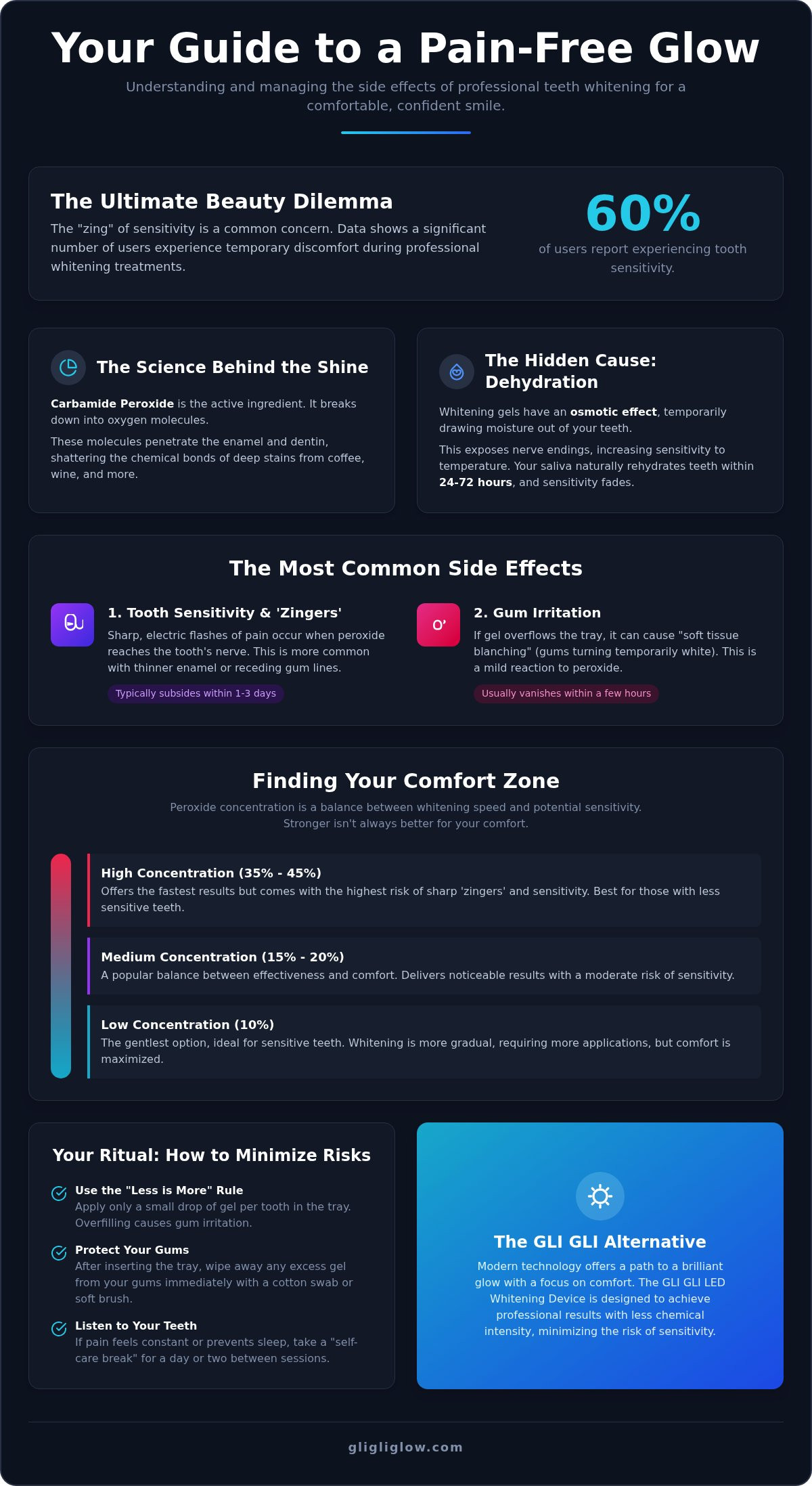
Your Ritual: How to Minimize Risks and Manage Discomfort ✨
Transform your whitening routine into a luxurious self-care ritual! Achieving that radiant glow is all about the steps you take before and after the gel touches your teeth. By being proactive, you can drastically reduce the chances of experiencing opalescence teeth whitening side effects like sharp sensitivity or gum irritation. It's about working with your body, not against it, to ensure your journey is as pleasant as the final result. 💖
One of the most important rules for a comfortable experience is the "Less is More" approach. It's tempting to think that more gel equals faster results, but overfilling your trays is a recipe for gum drama. You only need a tiny, teardrop-sized amount of gel in the center of each tooth compartment. When you use too much, the tray squeezes the excess peroxide onto your delicate gum tissue, leading to stinging and blanching. If you notice any overflow, simply wipe it away with a clean tissue or a soft toothbrush immediately. Precision is the key to a pain-free sparkle!
The Pre-Glow Preparation
Start your journey two weeks early by switching to a high-quality desensitizing toothpaste. These formulas help block the microscopic pathways to your nerves, creating a protective shield before you even begin whitening. It's also vital to ensure your oral health is "whitening ready." Peroxide can cause intense discomfort if it finds its way into an untreated cavity or a cracked filling. If you're looking for the gentlest way to start your transformation, check out our Sensitive Whitening Strips Guide for expert tips on achieving a brilliant smile without the stress. 🦷✨
Post-Treatment Soothing Rituals
After you remove your trays, your teeth are temporarily more porous and "thirsty" for minerals. This is the perfect time to rehydrate! Using a post-treatment gel with potassium nitrate or fluoride can instantly soothe nerve endings and help your enamel recover faster. You should also commit to the "White Diet" for at least 24 to 48 hours after each session. Since your teeth are more prone to staining during this window, avoid coffee, red wine, and dark berries to keep your new glow pure. 🍦🚫
If you find that your teeth are reacting strongly, listen to them! Creating a sustainable schedule, like whitening every other day, gives your enamel the time it needs to rehydrate and rest. For those pörgős (busy) days when you want to maintain your results without a full session, the GLI GLI Teeth Whitening Pen is a fantastic, gentle tool for quick touch-ups. Ready to upgrade your routine to something more comfortable? Discover the GLI GLI Teeth Whitening Kit and embrace a brighter, more confident you today! 🌟
The GLI GLI Alternative: Modern Tech for a Pain-Free Glow 🌟
We've spent a lot of time talking about how to manage opalescence teeth whitening side effects, but what if you could avoid that intense chemical stress altogether? Traditional whitening often feels like a trade-off between a bright smile and total comfort. It's time to stop settling for the "zing" and start embracing a smarter, more modern way to glow! The GLI GLI LED Whitening Device is designed to give you that stunning, pearly white finish without the high-peroxide drama that often leads to sensitivity. ✨
Our approach is all about the "ritual" experience. Instead of relying on aggressive chemical concentrations, the GLI GLI Teeth Whitening Kit uses a dental-grade, sensitivity-focused formula. We believe your self-care routine should be a moment of joy, not a test of endurance. By combining expert-developed ingredients with cutting-edge technology, we've created a system that delivers professional results right from your vanity. Plus, you can smile with total peace of mind knowing our products use FDA and ISO-approved ingredients. Safety and style go hand in hand here! 💖
Why LED Technology Changes the Game
Light is the secret ingredient to a faster, gentler glow-up. The GLI GLI LED Whitening Device works by accelerating the whitening process through physical energy rather than just chemical intensity. This targeted approach means the gel works more efficiently on stubborn surface stains and deep-set discoloration. Since the light does the heavy lifting, we can keep the peroxide levels lower, which is the ultimate win for anyone worried about opalescence teeth whitening side effects like enamel dehydration or sharp nerve pain. 🦷
- Efficiency: Target stains more effectively for a uniform, radiant look.
- Comfort: Shorter wear times mean less time for sensitivity to develop.
- Control: Achieve your whitest smile yet without the harsh chemical burn.
Join the Glow-Up Revolution
Thousands of pörgős (vibrant) city dwellers are already switching to our expert-developed system because they're tired of the "no pain, no gain" dental philosophy. We're so confident in our technology that we offer a comprehensive result guarantee. It's about more than just white teeth; it's about the confidence that comes with a healthy, happy smile. Your ritual should be a kényeztető (pampering) experience that leaves you feeling refreshed and ready to take on the world. 🌟
Don't let the fear of "zingers" hold you back from the smile of your dreams. You deserve a glow-up that feels as good as it looks! Start your pain-free glow-up with the GLI GLI Teeth Whitening Kit!
Embrace Your Radiant New Smile with Confidence 🌟
Your journey to a Hollywood smile shouldn't be a test of endurance. We've explored how understanding the science of tooth dehydration and choosing the right peroxide concentration can make all the difference. By creating a mindful ritual and prepping your enamel with desensitizing care, you can effectively manage opalescence teeth whitening side effects while still achieving that brilliant, pearly glow. Remember, a beautiful smile is one that makes you feel comfortable and confident, not cautious! ✨
If you're ready to skip the chemical intensity and enjoy a modern, sensitivity-focused experience, our expert-developed system is here for you. We've combined FDA and ISO-approved ingredients with a comprehensive result guarantee to ensure your glow-up is as safe as it is stunning. It's time to treat your smile to the kényeztető (pampering) ritual it deserves. 💖
Ready to see the difference for yourself? Discover the GLI GLI Teeth Whitening Kit for a Sensitive Glow. You're just one session away from your most radiant self, so go ahead and shine bright! 🌟
Frequently Asked Questions
Is it normal for my teeth to hurt after using Opalescence?
Yes, feeling a bit of discomfort is a totally normal part of the process for many people! When the peroxide travels through the enamel to break down stains, it can temporarily irritate the nerve endings in your dentin. This sensation usually feels like a sharp flash of cold. While it's common, it shouldn't be unbearable. If the pain is too much, try shortening your wear time next time.
How long do Opalescence side effects usually last?
Most opalescence teeth whitening side effects are short-lived and typically fade within 1 to 3 days after your treatment session. The discomfort happens because your teeth are temporarily dehydrated. As your saliva naturally replenishes the minerals and moisture in your enamel, the sensitivity disappears. If your symptoms last longer than a week, it's a good idea to check in with your dental professional to ensure your oral health is on track.
What should I do if my gums turn white after whitening?
Don't panic if your gums turn white! This is known as soft tissue blanching. It happens when the whitening gel overflows from the tray and touches your gums. The white color is a temporary reaction to the peroxide and usually returns to a healthy pink within a few hours. To prevent this next time, use a smaller amount of gel and wipe away any excess from your gum line immediately.
Can I use Opalescence every day if I have sensitive teeth?
Using high-strength gels every single day might be too intense if you already have sensitive teeth. It's much better to create a sustainable ritual by whitening every other day or even every third day. This gives your enamel and nerves plenty of time to rest and rehydrate between sessions. Your glow-up is a marathon, not a sprint, so listen to your body and take those necessary self-care breaks!
Do white spots on teeth after whitening go away?
Yes, those chalky white spots are temporary and usually vanish within a few days. They appear because the whitening process highlights areas of hypocalcification where the mineral content is slightly different. As your teeth reabsorb moisture from your saliva after the treatment, these patches naturally blend back into the rest of your tooth color. Drinking plenty of water after your session can help speed up this rehydration process.
What is the best concentration of Opalescence for beginners?
The 10% Carbamide Peroxide concentration is the gold standard for beginners. It offers a gentle introduction to professional whitening with the lowest risk of "zingers." While it takes a few more sessions to see the final result compared to the 35% version, the comfort level is significantly higher. It's the perfect way to start your whitening journey without the fear of overwhelming opalescence teeth whitening side effects.
Can Opalescence cause permanent damage to my enamel?
When used as directed, Opalescence does not cause permanent damage to your enamel. The formulas are pH-balanced and designed by dental experts to be safe for your teeth. However, using professional-grade gels on open cavities or severely worn enamel can lead to serious issues. Always ensure your oral health is in good shape before starting a new ritual, and never exceed the recommended wear times provided by the manufacturer.
How can I stop 'zingers' after teeth whitening?
To stop zingers in their tracks, start using a desensitizing toothpaste containing potassium nitrate two weeks before you begin whitening. During your treatment, try reducing your wear time or switching to a lower peroxide concentration. If a zinger happens, avoid very cold or hot drinks for a few hours. You can also use a soothing product like the GLI GLI Teeth Whitening Pen for gentle maintenance that is much easier on your nerves.


