


What if the difference between two whitening gels is less about which one is “stronger” and more about how its active ingredient releases? If you’ve wondered what is the active ingredient in teeth whitening gel, the short answer is usually hydrogen peroxide or carbamide peroxide. Both can help change tooth colour, but they work at different speeds, so the label deserves a closer look.
It’s also fair to consider sensitivity before adding a whitening gel to your routine. The active ingredient matters, but so do the concentration, the rest of the formula, and how you use the product. A higher number doesn’t automatically mean a better fit for your teeth.
In this guide, you’ll learn how hydrogen peroxide and carbamide peroxide compare, how peroxide-based gels work, and what ingredient lists and strength labels can tell you. We’ll also cover practical points to consider when choosing an at-home gel or refill, so you can make a more informed choice and keep your smile-care routine comfortable.
Key Takeaways
- Wondering what is the active ingredient in teeth whitening gel? Learn why formulas vary and what to look for on the label.
- See how peroxide-based gels can break down some colour compounds, and why following the product’s directions matters.
- Understand the relationship between hydrogen peroxide and carbamide peroxide to make ingredient labels easier to interpret.
- Use a simple label-reading checklist: identify the active, review directions and warnings, and consider sensitivity.
- Put the ingredient in context by weighing the full formula and realistic expectations, including how whitening affects crowns, veneers, and fillings.
What Is the Active Ingredient in Teeth Whitening Gel?
Many teeth whitening gels use hydrogen peroxide or carbamide peroxide as their active ingredient, but formulas vary. So, what is the active ingredient in teeth whitening gel? It depends on the product. The active ingredient is the component intended to produce the whitening effect. Hydrogen peroxide and carbamide peroxide are common peroxide-based actives, but don’t assume every gel uses one of them.
Start with the product label. It identifies the ingredient intended to whiten, while the directions and other formula details explain how the gel is meant to be applied. For a broader overview, see this guide to active ingredients in tooth whitening.
What does an active ingredient do in whitening gel?
The active ingredient is the formula’s whitening component. Other ingredients can support the gel’s texture, stability, or application. These supporting ingredients matter too: the full ingredient list provides more information than the active ingredient alone.
The active ingredient tells you what is intended to create the whitening effect, while the rest of the formula contributes to the product as a whole. A gel’s name or format won’t tell you everything, so read the label rather than relying on a general description.
Are hydrogen peroxide and carbamide peroxide both whitening ingredients?
Yes. Both are common peroxide-based actives used in whitening products, but they aren’t different names for the same ingredient. A gel may list hydrogen peroxide as its active, or it may use carbamide peroxide, which releases hydrogen peroxide during use. That relationship explains why the two ingredients are often discussed together.
Keep the distinction clear when comparing labels. If a product lists carbamide peroxide, it identifies a different compound that releases hydrogen peroxide as it’s used. The product’s directions explain how to apply that formula, so follow its label rather than assuming all gels work alike.
When reviewing a whitening gel or refill, identify the active ingredient first, then read the rest of the label for context. This makes comparisons clearer and helps you understand what the product is designed to do.
How Do Peroxide-Based Teeth Whitening Gels Work?
Peroxide-based gels whiten through oxidation. Peroxide interacts with some coloured compounds, called chromogens, in or on the teeth. It can change their chemical structure so they absorb and reflect light differently, making discolouration look less noticeable. The gel doesn’t scrub away tooth structure, and results vary from person to person.
What happens when whitening gel contacts teeth?
Peroxide in a gel can act on colour compounds from both surface stains and discolouration within the tooth. Surface stains may come from things like coffee or tea, while deeper discolouration can have other causes. Whitening gels may affect these types of colour differently, so one product won’t necessarily address every stain in the same way.
Visible results depend on the stain type, individual tooth characteristics, and how the product is used. The active ingredient name alone can’t predict the outcome. Concentration, formula, contact with the teeth, and following the product’s directions all matter. Two gels won’t necessarily produce the same result just because both are peroxide-based.
Does carbamide peroxide work differently from hydrogen peroxide?
Carbamide peroxide releases hydrogen peroxide over time during use. Hydrogen peroxide is the peroxide that interacts with colour compounds, so the distinction is mainly how the ingredient is formulated and released, not a completely different whitening mechanism. Ingredient names alone don’t show the full strength or expected performance of a product; read its label and directions for context.
In short, peroxide can help change some compounds responsible for tooth discolouration, but the effect depends on the type of stain and how a particular gel is designed to be used. Whitening isn’t the same as removing enamel, and it doesn’t change the material of dental restorations.
If you’re asking what is the active ingredient in teeth whitening gel because you’re comparing at-home options, use the label as your guide: check the active ingredient, then consider the complete formula and instructions. For an at-home routine, explore teeth whitening gel refills.
Hydrogen Peroxide vs. Carbamide Peroxide: What Is the Difference?
Both hydrogen peroxide and carbamide peroxide are used as whitening actives, but they’re not the same ingredient. The key difference is how the peroxide is supplied: hydrogen peroxide acts directly, while carbamide peroxide releases hydrogen peroxide during use. That release affects how the ingredients are described and compared, but it doesn’t make one universally better.
| Ingredient on the label | Relationship | How to read it |
|---|---|---|
| Hydrogen peroxide | The peroxide active itself | Check its listed concentration and the product directions. |
| Carbamide peroxide | Releases hydrogen peroxide during use | Read the carbamide peroxide strength alongside the full instructions. |
Concentration numbers don’t mean the same thing across both ingredients. For context, 10% carbamide peroxide is roughly equivalent to 3.5% hydrogen peroxide in the amount of hydrogen peroxide released. Treat this as a comparison, not a universal guide to product performance: the complete formula and directions still matter.
How does each peroxide appear on a product label?
Look for “hydrogen peroxide” or “carbamide peroxide” in the active-ingredient information. A label naming carbamide peroxide isn’t simply using another name for hydrogen peroxide; it identifies a compound that releases hydrogen peroxide during use. Compare like with like, and read the directions as well as the ingredient list. The application method and instructions help explain how a particular gel is intended to be used.
Is one whitening ingredient better for sensitive teeth?
There isn’t one peroxide type that’s automatically gentler for everyone. Sensitivity can vary with concentration, exposure, the rest of the formula, and individual dental health. Gels with different active ingredients may also have different directions and formulations. Don’t choose based on the ingredient name alone, and don’t assume a lower-looking number tells the whole story.
If sensitivity is a concern, check the product’s warnings and follow its directions rather than changing how long or how often you use it. Stop and reassess if you experience discomfort, especially if it’s persistent. The useful question isn’t only what is the active ingredient in teeth whitening gel, but how that active is presented in the complete product and how the label says to use it.
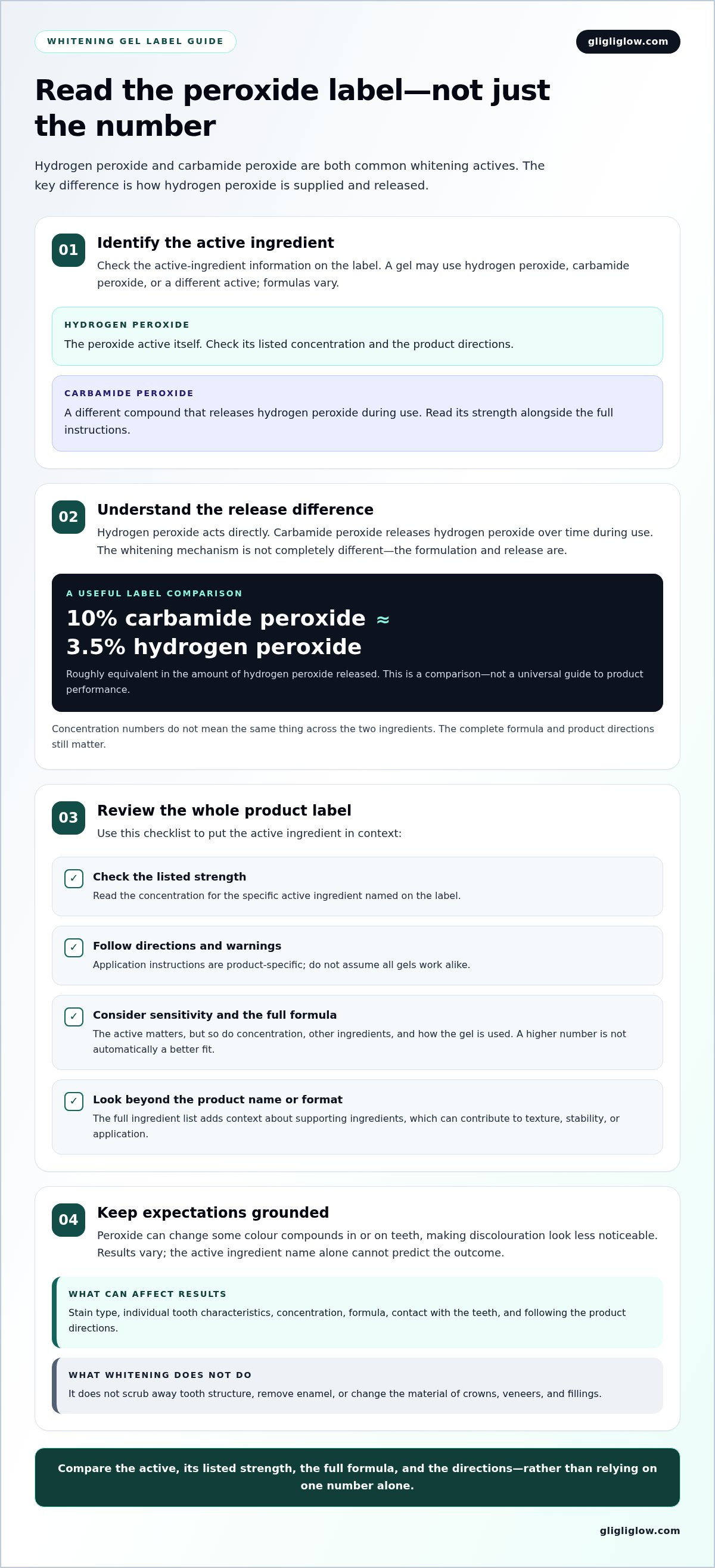
How to Read a Teeth Whitening Gel Label and Use It Thoughtfully
A quick label check helps you understand what a whitening gel is designed to do and how to use it as directed. Start with these steps:
- Identify the active ingredient. Note whether the label lists hydrogen peroxide, carbamide peroxide, or another whitening active.
- Read the full directions. Check how the product is applied, how often it’s intended to be used, and any instructions about the applicator or tray.
- Review the warnings and intended use. Look for cautions that apply to you and make sure you understand the product’s stated purpose.
- Consider sensitivity and dental concerns. Existing tooth sensitivity or other concerns are worth considering before you begin.
Which details matter beyond the active ingredient?
The active ingredient is one piece of the picture. The full formula, stated concentration, directions, warnings, and intended use add context. Concentration alone doesn’t describe the entire formula or tell you exactly how the gel will feel during use. Read the specific product instructions because application and use guidance can vary between formulas.
Use only the amount and application method described on that product’s label. Applying extra gel or leaving it on longer isn’t a reliable shortcut to better whitening, and it may increase discomfort. Follow the product directions rather than borrowing a routine from another gel.
What should you do if whitening gel causes sensitivity?
Some people notice temporary tooth sensitivity or mild gum irritation during whitening. Experiences differ, so the ingredient name alone can’t predict how your teeth will respond. If you experience irritation or pain that feels concerning, stop using the product and seek appropriate dental advice, especially if symptoms persist or worsen.
A product described as being for sensitive teeth may suit some routines, but it can’t guarantee that discomfort won’t happen. If you’re exploring this topic further, read our guide to sensitive whitening strips for related considerations.
Before choosing an at-home gel, ask yourself: Do I understand the active, the directions, and the warnings? If you’re ready to explore gel options, browse teeth whitening gel refills and use the product label to guide your routine.
Choosing a Whitening Gel: Put the Ingredient in Context
The active ingredient is a useful starting point, not the whole decision. Before choosing a whitening gel, review the complete formula, directions, and warnings, consider your sensitivity needs, and set realistic expectations. Asking “what is the active ingredient in teeth whitening gel?” can help you understand the label, but the ingredient name alone can’t tell you whether a product suits your routine or what results to expect.
Keep restorations in mind, too. Whitening gels can affect natural tooth colour, but they don’t change the colour of crowns, veneers, or fillings. If a restoration is visible in your smile, whitening may leave a difference between its shade and the surrounding natural teeth.
When should you consider professional dental advice first?
Consider getting dental advice before whitening if you have persistent sensitivity, existing oral-health concerns, or uncertainty about whether whitening is suitable for you. This isn’t a diagnosis, and it doesn’t mean everyone needs an appointment before using an at-home product. It’s a sensible next step when personal concerns could affect your choice or comfort. At-home kits and gels are consumer products, distinct from whitening procedures performed in a dental clinic.
How can ingredient knowledge guide your at-home routine?
Let the product label guide your decision. Identify the active ingredient, review the full formula and warnings, and follow that product’s directions exactly. Don’t assume a gel’s ingredient or strength based on its format or brand name. GLI GLI offers at-home teeth whitening kits and gel refills. Review the label for the specific gel you choose and use its directions to guide your routine.
For a related next read, explore a guide to at-home teeth whitening kits and what to consider as you build your routine. Keep your expectations grounded, follow the instructions, and choose an option that feels thoughtful for your teeth. When you’re ready to explore at-home options, take a look at GLI GLI’s teeth whitening kits and gel refills.
Choose Your Whitening Gel With Confidence
So, what is the active ingredient in teeth whitening gel? Many formulas use hydrogen peroxide or carbamide peroxide, but ingredients vary by product. Carbamide peroxide releases hydrogen peroxide during use, and the two aren’t interchangeable names. The label, complete formula, and directions all help you understand how a gel is intended to be used.
Before choosing, check the active ingredient, read the warnings, and follow the specific instructions. Consider your sensitivity needs and keep expectations realistic: whitening gels don’t change the colour of crowns, veneers, or fillings. If you have persistent sensitivity or other dental concerns, seek appropriate dental advice before starting.
GLI GLI offers at-home teeth whitening kits and gel refills, including solutions for sensitive teeth developed by dental experts. Explore the range and review each product’s details to find an option that fits your routine: Explore GLI GLI’s at-home whitening range. A little label-reading can help you feel more informed and confident as you care for your smile.
Frequently Asked Questions
What is the main active ingredient in teeth whitening gel?
The most common active ingredients are hydrogen peroxide and carbamide peroxide, though formulas vary. If you’re asking what is the active ingredient in teeth whitening gel, check the specific product label rather than assuming all gels use the same one. The active ingredient is the component intended to create the whitening effect. Other ingredients can support the gel’s texture, stability, or application, so the full ingredient list provides useful context too.
Is hydrogen peroxide or carbamide peroxide better for whitening teeth?
Neither ingredient is universally better. Hydrogen peroxide acts directly, while carbamide peroxide releases hydrogen peroxide during use. The right option depends on the specific product, its formula and directions, and your needs. Concentration figures also can’t be compared at face value across the two ingredients. Read the product label and use instructions together instead of choosing based on the ingredient name or a strength number alone.
How does carbamide peroxide whiten teeth?
Carbamide peroxide whitens by releasing hydrogen peroxide during use. The released peroxide can interact with some coloured compounds in teeth, changing how they absorb and reflect light so discolouration may look less noticeable. The result depends on the product and how it’s used, as well as stain type and individual tooth characteristics. Follow the specific gel’s directions, since application guidance can vary between products.
Can teeth whitening gel damage enamel?
Whitening gel isn’t intended to remove enamel, but using a product incorrectly or more often than directed can increase the chance of sensitivity or gum irritation. Formulas and instructions differ, so don’t assume one gel’s directions apply to another. Use only as directed, and stop if you experience concerning irritation or pain. If you have questions about your enamel or oral health, seek appropriate dental advice before whitening.
Can whitening gel cause sensitive teeth?
Yes, some people experience temporary tooth sensitivity or gum irritation while using whitening gel. How your teeth respond can depend on the product, its formula and directions, and your individual dental health. A product intended for sensitive teeth may suit some users, but it can’t guarantee discomfort won’t occur. Stop using the gel if you experience concerning or persistent pain, and seek appropriate dental advice.
How do I know what is in my teeth whitening gel?
Read the product label and packaging. Look for the active ingredient, such as hydrogen peroxide or carbamide peroxide, and review the full ingredient list, directions, warnings, and intended use. The active tells you which component is intended to whiten, while other ingredients may support the formula. Check the label for the specific gel you’re using, even if you’ve used a similar product before.
Do teeth whitening gels whiten crowns, veneers, or fillings?
No, whitening gels change the colour of natural teeth, but they don’t change the shade of crowns, veneers, or fillings. If you whiten natural teeth around a restoration, the difference in colour may become more noticeable. Consider any visible dental work when setting expectations. If you’re unsure how whitening may affect the appearance of your smile, discuss your situation with a dental professional before starting.
Is peroxide-free teeth whitening gel effective?
It depends on the formula and what you mean by effective. Peroxide-free products may use other approaches, such as helping remove surface stains or temporarily balancing the appearance of yellow tones. That doesn’t necessarily mean they work like peroxide gels, which can act on colour compounds in teeth. Check the product’s active ingredients and claims, and keep expectations realistic about the type of whitening it may provide.


