


Crunchy produce and a few everyday staples can support a cleaner-looking smile. The best foods for healthy white teeth include apples, carrots, celery, cucumbers, cheese, and plain yogurt. They may help clear some surface debris or support enamel, but food alone won’t whiten teeth.
It makes sense to look to your daily meals for a brighter smile. What you eat and drink can affect surface stains, saliva, and the acids your teeth encounter, so small, balanced choices can complement your oral-care routine.
Here, you’ll find foods that may help clean or brighten teeth, including how crunchy produce encourages saliva to wash away debris. You’ll also see which sugary, acidic, or dark-colored choices to limit, plus simple ways to enjoy them more thoughtfully. Let’s make your everyday choices feel fresh, practical, and smile-friendly. ✨
Key Takeaways
- Choose crisp produce like apples, carrots, and celery to encourage saliva and help sweep away food debris.
- Learn which dark-colored foods and drinks can leave stains, and how to enjoy them more thoughtfully.
- Limit frequent sugary or acidic choices, and use water to help rinse your mouth after eating or drinking.
- Explore how dairy, leafy greens, and other everyday foods can support tooth health and a brighter-looking smile.
1. Crunchy fruits and vegetables and saliva production
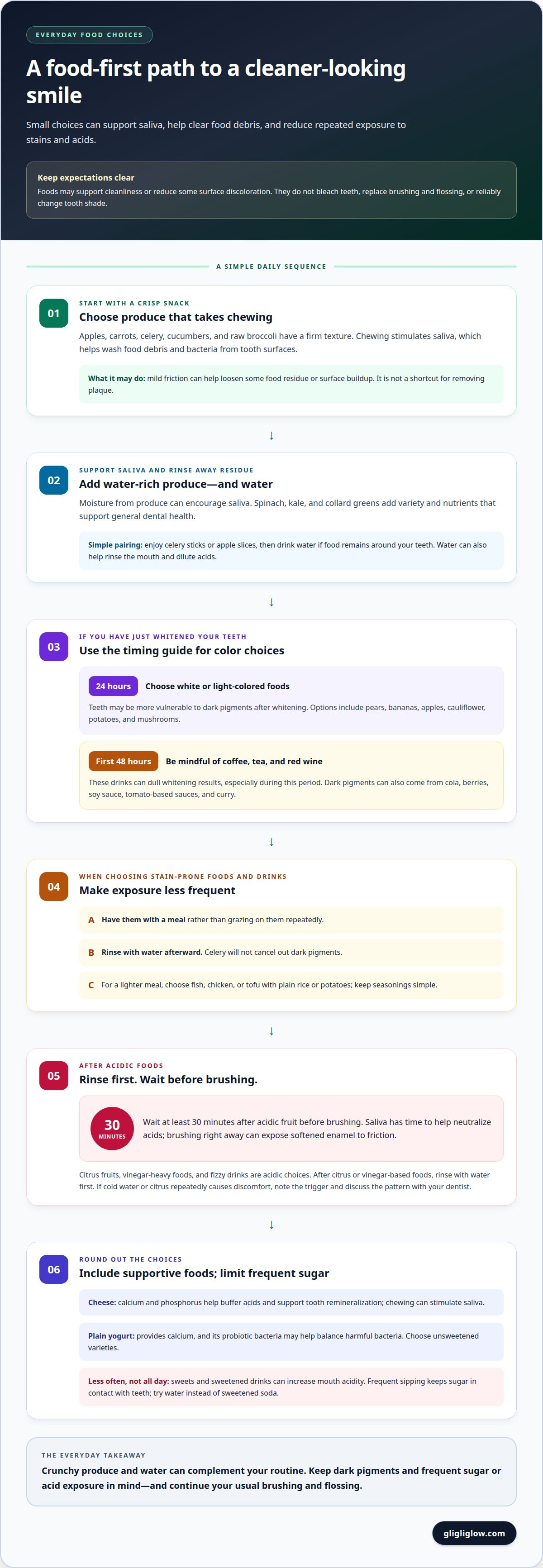
Reach for crisp apples, carrots, celery, or raw broccoli when you want a crunchy snack. Their firm texture takes more chewing than soft foods, and chewing stimulates saliva. Saliva helps wash food debris and bacteria from tooth surfaces. It’s a simple way to support a clean-feeling mouth between your usual oral hygiene steps.
Apples, carrots, celery, and cucumbers may also help loosen some surface buildup as you chew. Their texture provides a mild cleansing effect, but it doesn’t replace brushing or flossing. Think of crunchy fruits and vegetables as additions to your dental-care routine, not a shortcut for removing plaque. Pair them with your regular oral hygiene habits for a more complete approach.
Water-rich produce offers another benefit: its moisture can encourage saliva and help rinse away debris. Leafy greens, including spinach, kale, and collard greens, add variety and nutrients that support general dental health. Snack on celery sticks or apple slices, then drink water if food remains around your teeth. Small, practical choices make produce easy to include throughout the day.
After teeth whitening, light-colored foods may be a practical choice because they’re less likely to stain. Options include pears, bananas, apples, cauliflower, potatoes, and mushrooms. You don’t need to build every meal around them, but they can guide food choices after whitening, when teeth may be more vulnerable to dark pigments.
Balance matters with acidic fruits. Strawberries and pineapple can fit into a varied diet, but their acidity may affect enamel. After eating acidic fruit, wait at least 30 minutes before brushing. This gives saliva time to help neutralize acids, while immediate brushing may expose softened enamel to friction. If fruit regularly triggers sensitivity, note which kinds cause it and discuss the pattern with your dentist.
2. What Foods Make Your Teeth Whiter?
After whitening, teeth may be more vulnerable to dark pigments. Dentists suggest choosing white or light-colored foods for twenty-four hours afterward. Coffee, black tea, red wine, cola, berries, soy sauce, tomato-based sauces, and curry can contribute to staining. The color and frequency of these foods matter, whether you have a small snack or a full meal.
For a lighter meal, choose fish, chicken, or tofu with plain rice or potatoes. Keep seasonings simple: vibrant sauces and strongly colored spices can leave pigments on teeth. Bread and pasta are usually less likely to stain, but varieties containing molasses or food coloring can transfer darker color. Cheese and plain yogurt provide minerals, but they don’t bleach teeth or prevent every stain.
How strong is the evidence that foods whiten teeth compared with whitening products? Foods can support cleanliness or reduce some surface discoloration, but they aren’t a reliable way to change tooth shade. Whitening products are intended to lighten teeth, while foods mainly support everyday care. Strawberries contain malic acid, and pineapple contains bromelain, but neither should be treated as a substitute for whitening.
To enjoy stain-causing foods, have them with a meal rather than grazing on them repeatedly, and rinse with water afterward. Coffee, tea, and red wine can dull whitening results, especially during the first 48 hours after treatment. Celery won’t cancel out dark pigments, so focus on rinsing and your usual oral hygiene. If sensitivity persists or stains return despite these steps, consult a dentist to assess the cause. For a whitening option beyond food choices, explore at-home teeth whitening.
3. Sugary and acidic foods to limit
Sugary snacks and drinks can increase acidity in the mouth, affecting teeth and enamel. Sweets, sweetened drinks, and frequent sipping keep sugar in contact with teeth, so enjoy them less often rather than grazing throughout the day. Acidic choices include citrus fruits, vinegar-heavy foods, and fizzy drinks. Oranges can increase mouth acidity, and prolonged exposure may wear enamel. Tart fruits can still be part of meals, but moderation helps limit repeated acid exposure.
Enamel needs care because it cannot restore itself once it breaks down. The American Dental Association notes that enamel has no living cells and cannot repair itself after breakdown. Acid exposure can also contribute to tooth sensitivity, especially when enamel is worn. If cold water or citrus repeatedly causes discomfort, note the trigger and discuss the pattern with your dentist. Calcium-rich foods such as cheese can help buffer mouth acids as part of a balanced diet.
Should you brush immediately after eating acidic foods, or wait? Wait at least 30 minutes after acidic fruit before brushing, allowing saliva time to help neutralize acids. Brushing right away can expose softened enamel to friction. After citrus or vinegar-based foods, rinse with water first. Drinking water also helps saliva replenish and return the mouth toward its normal pH.
After whitening, be mindful of acidic foods as well as dark drinks that may stain. Water after meals can rinse the mouth and support saliva production without adding sugar or color. Try swapping sweetened soda for water, or pair a vinegar-dressed meal with plain water. These simple steps help reduce repeated acid and sugar exposure while keeping oral hygiene routines consistent.
4. Foods and drinks that may help clean or brighten teeth
Some foods support oral health through gentle cleaning, saliva, or nutrients. They don’t bleach teeth, but they can complement daily brushing and flossing. Crunchy apples, carrots, celery, and cucumbers create mild friction as you chew, which may help loosen food residue from tooth surfaces. Chewing also encourages saliva, which helps clear debris and dilute acids.
Cheese is a useful savory option. It contains calcium and phosphorus, which help buffer acids and support tooth remineralization. Chewing cheese can also stimulate saliva production. Plain yogurt provides calcium, and its probiotic bacteria may help balance harmful bacteria in the mouth. Choose unsweetened varieties, since added sugar can work against your oral health goals.
Pineapple contains bromelain, an enzyme that may help break down plaque on tooth surfaces. Strawberries contain malic acid, which may help lift surface discoloration, but they’re acidic fruit, not a reliable whitening treatment. Enjoy them as food rather than rubbing them on your teeth. After acidic fruit, give enamel time before brushing, as described earlier.
Drinks need a little more thought. Water is a smart everyday choice, and after teeth whitening it can rinse the mouth and help wash away residue. Unsweetened green or black tea contains natural fluoride and may support enamel, but its pigments can also stain teeth. Keep tea unsweetened, and rinse with water afterward if you’re concerned about color.
Build a practical plate: pair crunchy vegetables with cheese, or serve plain yogurt with a meal. Lean proteins such as fish, chicken, and tofu add variety without relying on brightly colored sauces. These foods and drinks support a healthy routine, while proper oral hygiene remains the foundation for clean teeth. For a dedicated whitening step alongside food-conscious habits, explore the at-home teeth whitening kit.
GLI GLI: GLI GLI Teeth Whitening Kit
If food choices and everyday oral hygiene aren’t the whitening step you’re looking for, the GLI GLI Teeth Whitening Kit is an at-home option. Crunchy produce, water, and mindful choices around staining foods can support a clean-looking smile, but they don’t replace a whitening product when you want to address tooth shade.
GLI GLI also offers Teeth Whitening Gel Refills and a Teeth Whitening Pen. Consider an at-home whitening option as part of a thoughtful routine, rather than expecting foods to change your tooth color. Keep up your regular dental care habits alongside your whitening choices.
For more information, visit gligliglow.com.
Choose a smile-care routine that feels right for you
Let your next step be guided by what you want from your smile, rather than expecting one meal to change its appearance. The best foods for healthy white teeth can support thoughtful everyday care, while a dedicated whitening option serves a different purpose. Keep your routine practical and choose habits you can maintain comfortably.
If you’re considering whitening beyond food choices, explore an at-home option that fits alongside your regular dental care. GLI GLI offers at-home teeth whitening products for people considering that next step. If you have ongoing sensitivity or concerns about a change in tooth color, discuss them with your dentist when deciding what’s appropriate for you.
Ready to explore your options? Contact GLI GLI today and take your next smile-care step with confidence. ✨
Frequently Asked Questions
What Foods Make Your Teeth Whiter?
No food reliably changes your teeth’s natural shade like a whitening treatment can. The best foods for healthy white teeth can support a cleaner-looking smile through everyday eating habits, but they don’t replace whitening. For example, choose balanced meals and water rather than relying on a single “whitening” ingredient. If you want a visible shade change, food alone is unlikely to provide it.
What’s This About a “White Diet”?
A “white diet” means choosing pale-colored foods for a short period after whitening, rather than following a permanently restrictive menu. For example, choose plain rice, potatoes, cauliflower, or chicken without dark sauces. Light foods are less likely to leave visible pigments. After the first two days following whitening, gradually reintroduce other foods while keeping personal sensitivity in mind.
Which foods help keep teeth white and why?
The best foods for healthy white teeth are everyday choices that support dental health without adding lots of sugar or dark pigments. For a practical snack, pair plain yogurt with a banana, or add cucumber to a meal. These foods won’t bleach teeth, but they can be part of habits that support a clean-looking smile. Water is also a handy drink alongside meals and snacks.
Do crunchy fruits and vegetables remove surface stains from teeth?
Crunchy produce can create a mild cleaning effect as you chew, which may help loosen food residue and some surface buildup. It won’t remove every stain, especially discoloration that isn’t on the tooth surface. Enjoy an apple or carrot as a snack, but keep brushing and flossing as the foundation of oral care.
Can dairy foods like cheese, yogurt, and milk protect enamel and tooth color?
Dairy can support enamel because it provides calcium, and cheese also contains phosphorus. Cheese may help buffer acids, while plain yogurt provides calcium and probiotics. These foods support tooth health, but they don’t guarantee stain prevention or whiten teeth. Try unsweetened yogurt or cheese as part of a balanced meal, rather than treating dairy as a whitening method.
Which foods and drinks stain teeth the most?
Coffee, black tea, red wine, cola, dark sodas, berries, soy sauce, tomato-based sauces, and curries can leave pigments that contribute to staining. You can still enjoy them. Have them with a meal rather than sipping or snacking on them repeatedly, then rinse your mouth with water. That simple step helps wash away residue after darker foods and drinks.


